By Lauren Beauchamp, August 19, 2026
(Note: This article was originally published by Devex on August 19, 2026. View the article here.)
In partnership with the Dutch Ministry of Foreign Affairs, the Dutch Relief Alliance is shifting power by pioneering locally led anticipatory action before crises strike and systemic risk-sharing.
Every Aug. 19, World Humanitarian Day marks the contributions of aid workers worldwide — and this year, it arrives against a sobering backdrop. As 2026 began, more than 239 million people were in urgent need of humanitarian assistance. The resources available to reach them, meanwhile, are contracting sharply: international humanitarian funding has fallen by almost a third since 2023, with a single-year drop of 20% in 2025 leaving total assistance at its lowest level in a decade. This year’s backdrop is further darkened by a sharp deterioration in the conditions under which aid workers operate. Attacks on humanitarian personnel and facilities are rising, and respect for international humanitarian law — the body of rules meant to protect civilians and those delivering aid in conflict zones — deteriorates at an alarming rate. Flagrant violations of these laws are placing humanitarian workers at grave risk, with devastating consequences for the civilians who rely on them.
The Dutch Relief Alliance, or DRA, is an alliance of 14 Dutch nongovernmental organizations in partnership with the Dutch Ministry of Foreign Affairs, or MFA. What makes the DRA distinctive is not a single program or approach, but a model: flexible, multiyear, unearmarked funding that enables fast, effective, and innovative humanitarian response. “It’s truly an alliance and a strategic partnership,” says Sven van den Berg, head of humanitarian aid at the MFA. “It very much shows the level of trust that there is.” This predictability allows DRA partners to deploy rapidly, build capacity before crises peak, and invest in promising approaches — from anticipatory action to equitable risk-sharing with local partners.
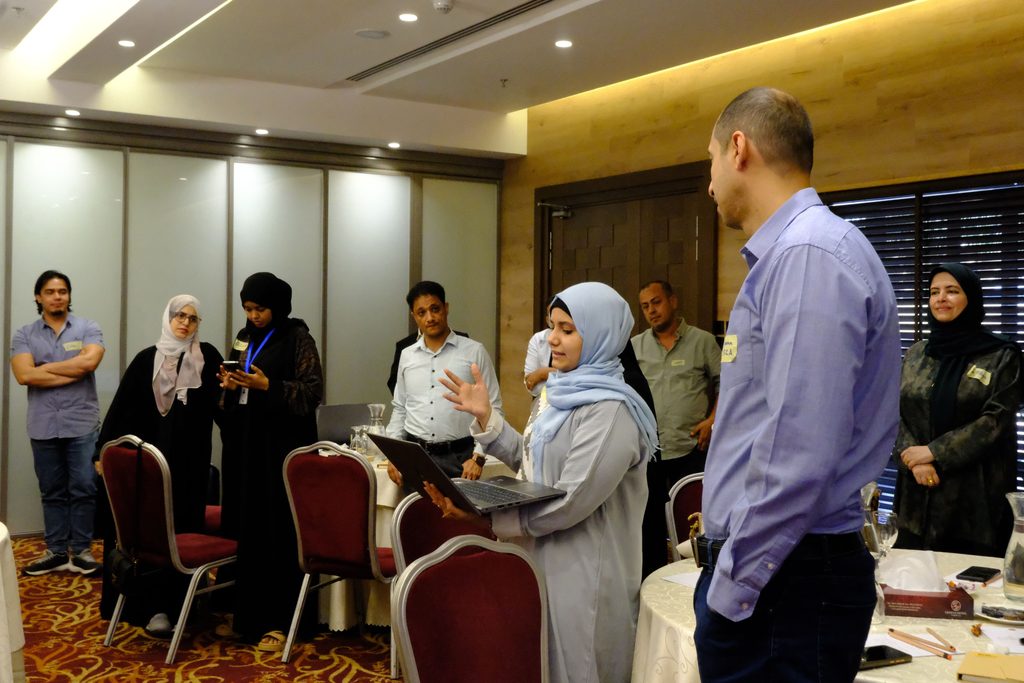
International, local, and national partners in Yemen participating in a risk-sharing workshop. Photo by: CARE Nederland.
This shift points to a more critical question for the global development sector: What can actually be achieved when donors, international NGOs, and local partners genuinely share power, risk and responsibility?
Cash before the crisis: The B-READY model
In Eastern Samar, a low-income coastal province in the Philippines facing the Pacific, typhoon vulnerability is severe — exposing agricultural and fishing communities to multiple high-category storms each year. “We call [Eastern Samar] the welcome committee because the eastern side faces the Pacific Ocean, usually along the typhoon path,” explains Maria Theresa Niña Espinola-Abogado, anticipatory action lead at Oxfam Pilipinas.
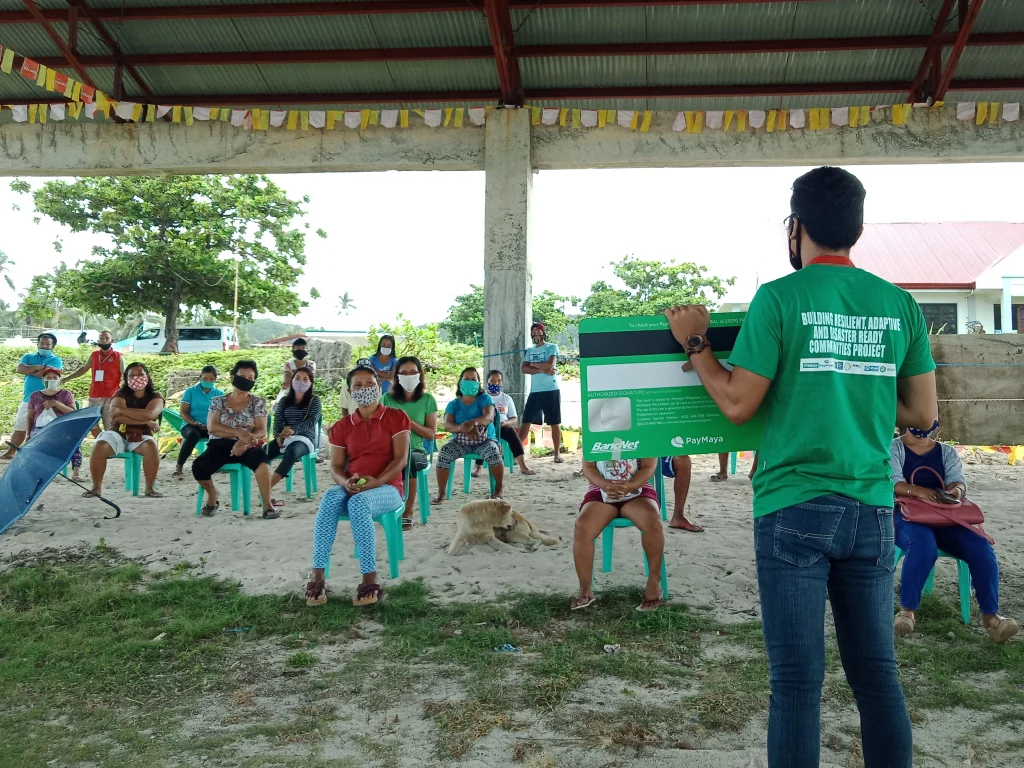
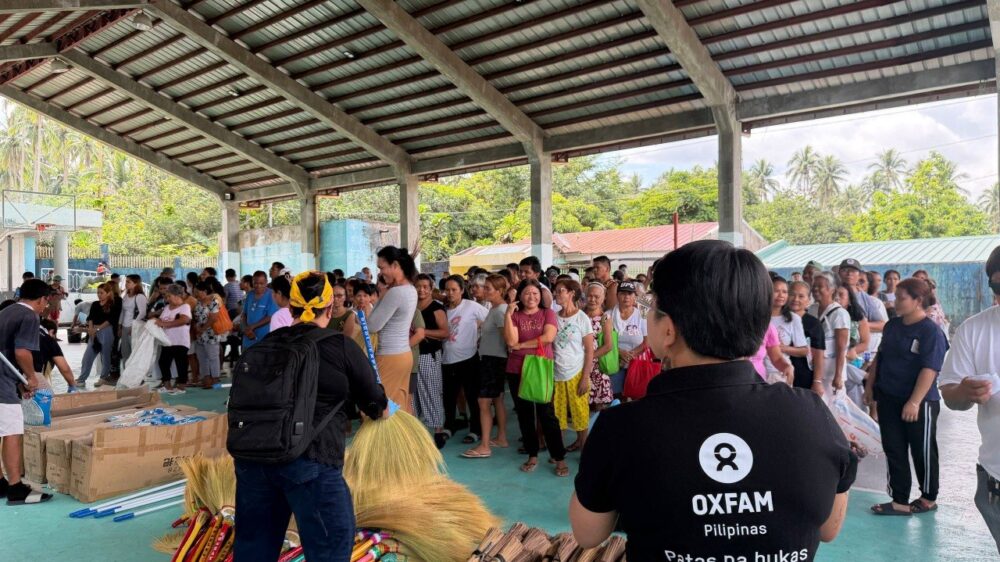
Photo by: Oxfam Pilipinas
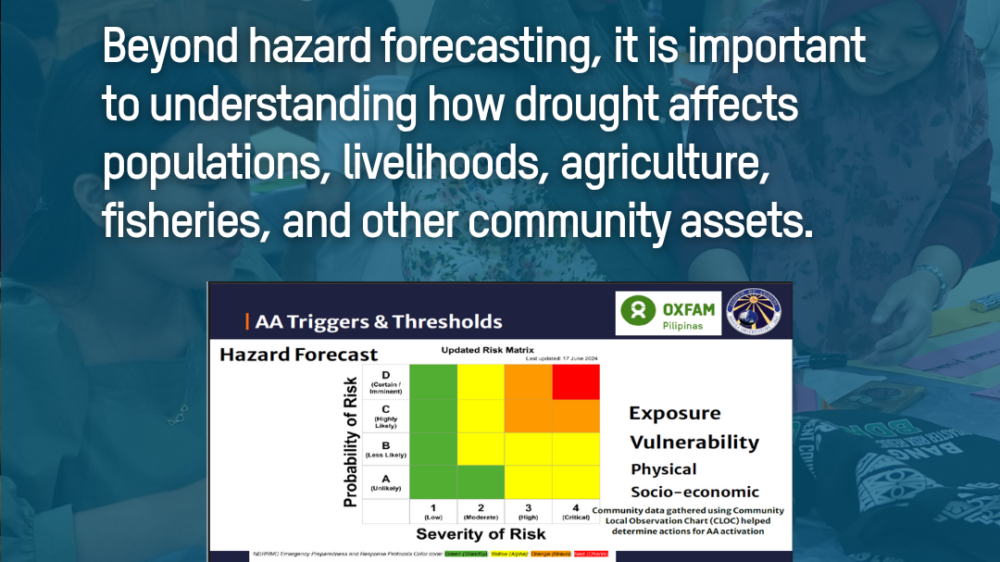
Historically, families had to wait for storms to pass to receive aid. But through the Building Resilient, Adaptive, and Disaster-Ready Communities, or B-READY, project — implemented by Oxfam and local partners — that dynamic has transformed. First initiated in 2017, B-READY received initial DRA support across two key phases: a pilot and proof-of-concept testing from 2019 to 2020, followed by a second phase spanning 2021 to 2022. Following this proven success, Oxfam advocated for a national anticipatory action law aimed at turning proactive response into the standard for humanitarian action rather than the exception. Expanding into a third phase, B-READY now integrates a market-based approach supported by a one-year Visa Foundation initiative. This phase helps local micro and small enterprises — the key suppliers of community goods and services — maintain business continuity and last-mile distribution ahead of extreme weather. Across these phases, B-READY uses parametric forecasting, weather triggers, and digital cash transfers to deliver support within a vital three-to-five-day window before landfall.
This proactive window allows families to take immediate, protective action by reinforcing shelters, buying food, or moving livestock and boats to secure ground.
This pre-disaster cash allows families to evacuate safely, reducing injury, preserving assets, and stabilizing local economies. B-READY has shown it can significantly reduce the cost of responding to disasters: every dollar of anticipatory cash provided to a farming family through B-READY helps that family avoid $7 in losses. By distributing support before a disaster strikes, anticipatory cash also helps prevent the price spikes that typically compound hardship for the most vulnerable households.
Crucially, the B-READY model was codesigned with communities, rather than imposed from the outside. Scaled through local government buy-in, the municipality of Salcedo formally embedded B-READY into its early warning frameworks. Its influence on the broader system has since been significant: In 2025, the Philippines passed a national anticipatory action law, with B-READY’s evidence base among the key drivers of that legislative shift. The model’s approach to community-defined triggers and digital cash transfers is also being referenced as regional anticipatory action frameworks develop across Southeast Asia, including under ASEAN’s broader disaster management agenda. “It has now become part of their preparedness culture — not to wait for a disaster to come but to actually monitor forecasts so that they know what to do even before the landfall of a typhoon,” Abogado says.
Historically, families had to wait for storms to pass to receive aid. But through the B-READY project, that dynamic has transformed.
From risk transfer to risk-sharing
World Humanitarian Day also draws attention to the rising risks faced by humanitarian workers themselves — and risk-sharing sits at the heart of how the DRA is responding to that challenge. For the DRA, the question is not whether risks exist, but how to distribute them more fairly across all players involved in humanitarian response.
At the heart of the alliance lies a shared wish to advance locally driven humanitarian action. For this, the DRA seeks complementarity between local and international players, with a deliberate shift toward more equitable partnerships and inclusive decision-making. In practice, this means confronting an entrenched reality: risks across key framework categories — operational, financial and fiduciary, information, safety and security, reputational, ethical, and legal/compliance — are formally acknowledged across the response chain, but in practice have often been pushed disproportionately onto local partners, the organizations least resourced to absorb them. To address this, the DRA, through its Localisation Working Group and in close collaboration with MFA, initiated groundbreaking risk-sharing pilots in countries such as Yemen, the Democratic Republic of Congo, Ethiopia, and Somalia.
In Somalia, the pilot gave local partners the opportunity to define risk on their own terms for the first time. “The way local partners define risk is often very different from how international NGOs define it,” says Amina Abdinoor of the Zamzam Foundation, vice chair of the DRA’s Local Advisory Group and LAG representative for Somalia. “One of the biggest lessons was that managing risk comes at a significant cost. Local partners are often expected to absorb those costs without the resources, influence, or decision-making power needed to manage them effectively.”
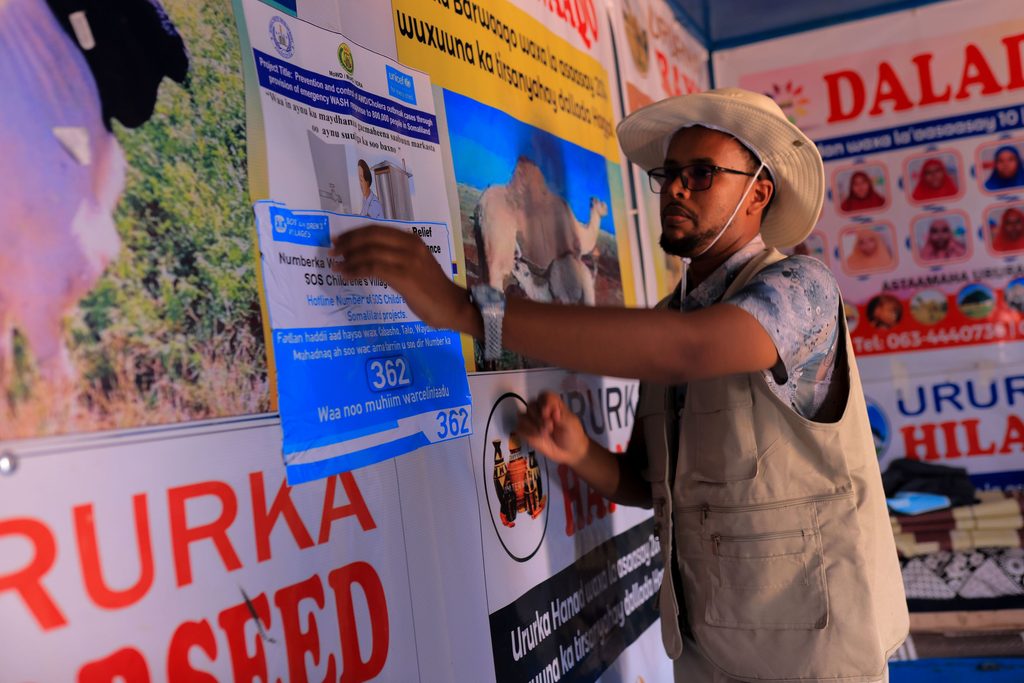
Local partner from Somalia Joint Response. Photo by: Somalia Joint Response (SOMJR)
“The pilot emerged from recognition that humanitarian risks were not being managed collectively,” says Elorry Mahou, program manager for humanitarian action at CARE Nederland and DRA Localisation Working Group cochair. “Risks were often assessed separately by the delivery chain and while this unilateral approach may allow one actor to address the risks they face, it may have the result of transferring risk to or generating new risk for other actors in the delivery chain.”
Through the pilots, DRA fostered open and honest conversations about risks, bringing partners together in a safe and trusted space. “The pilot allowed actors to sit around the same table and analyze risks together and it revealed that risk was frequently transferred rather than shared,” Mahou explains.
Co-owning risks requires joint problem-solving and a genuine shift in how donors engage. In practice, this means creating conditions where partners across the response — INGOs and local organizations alike — can be genuinely transparent about the risks they face, without fear that disclosure will invite penalties or consequences.
MFA changed its posture to make this work. “We cannot only give those risks or hand over those risks to our implementing agencies and say: make sure that you cover it all and that you take your measures,” says van den Berg. “We need to have an open dialogue where we are transparent about the room for flexibility, the potential real risks that could occur, and the measures partners suggest to take to mitigate them.”
That openness, van den Berg stresses, must be unconditional. “Partners have to know that they can be open about the risks that they face. Without the attachment of certain negative consequences to risks occurring in practice,” van den Berg adds. Trust, in other words, is not a byproduct of the model — it is the precondition for it.
“Equitable partnership would mean that local organizations are not only implementing programs anymore — they are around the table, helping to shape decisions, influencing outcomes, and accessing flexible funding.”
Elorry Mahou, program manager for humanitarian action at CARE Nederland and DRA Localisation Working Group cochair
A trust-based model for the future
The DRA’s flexible, multiyear, unearmarked funding model provides benefits that go well beyond responsiveness alone — it enables honesty. Because partners are not scrambling for short-cycled project grants, they can build genuine relationships before crises escalate, invest in capacity, and make decisions based on what is most needed and who is best placed rather than what is most fundable. “It’s a lot more efficient to have a platform where you can let partners themselves, based on a governance structure, decide who is most equipped to respond,” van den Berg adds.
Reflecting on what the risk-sharing dialogue made possible, Mahou recalls a local Yemeni partner opening up — for the first time — about the power imbalances and operational risks they had been absorbing alone. Afterward, the partner said: I would have never been able to share so openly with the donor.”
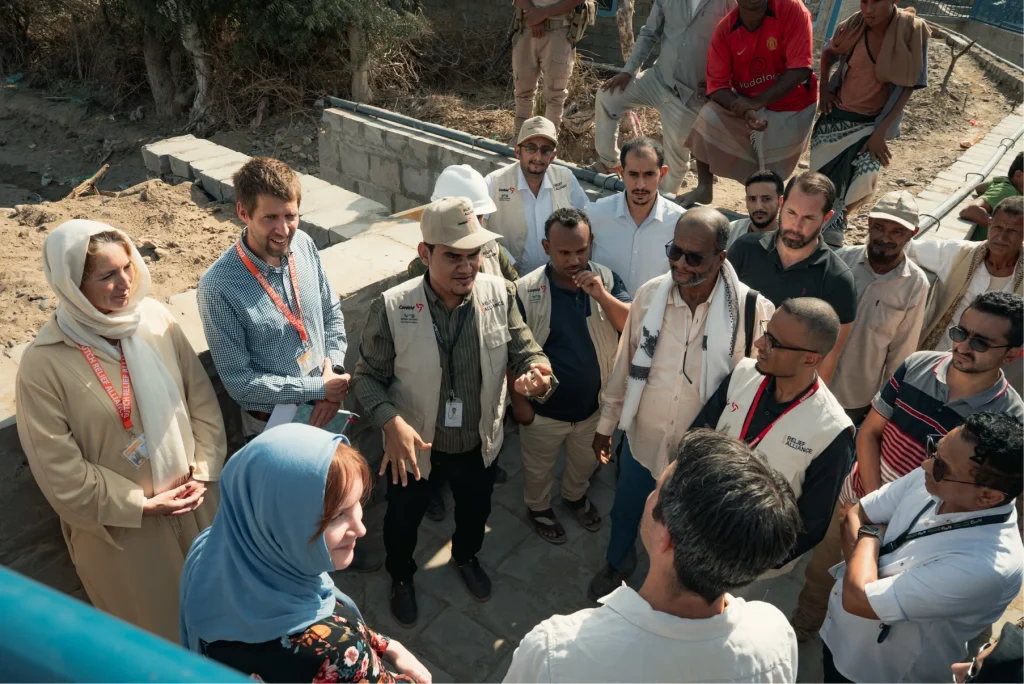
From left to right: Romee Dekker, policy officer for humanitarian aid, Dutch Ministry of Foreign Affairs; Garance Reus, 2025 DRA board of directors chair; and Anton van Wijk, DRA crisis response manager, meeting with local partners during a Yemen MFA-DRA delegation visit in November 2025. Photo by: CARE Nederland
For Mahou, this highlights both the progress made and the work ahead. “Equitable partnership would mean that local organizations are not only implementing programs anymore — they are around the table, helping to shape decisions, influencing outcomes, and accessing flexible funding.”
The DRA’s model is not a one-size-fits-all solution — the alliance itself would caution against that. What it offers instead is a set of principles that have proven their value across contexts: flexible multiyear unearmarked funding, complementary local and international partnerships, equitable risk-sharing, and the ability to combine immediate acute response with longer-term, protracted crisis engagement — all aligned with Grand Bargain commitments. For donors, governments, and humanitarian players watching from the sidelines, the question World Humanitarian Day poses this year is whether those principles could reshape how their own systems support the communities — and the workers — that need it most.