Downloads

Patterns and Changes in the Utilization of Barangay Disaster Funds: Evidence from Selected Communities in Eastern Samar and Catanduanes
Barangays are the first line of protection when disasters strike, yet incomplete utilization records, fragmented government oversight and limited technical capacity can prevent disaster funds from being used strategically to protect communities. Focusing on 12 barangays across six municipalities in Eastern Samar and Catanduanes, this study examines how Local Disaster Risk Reduction and Management Funds […]

An Amon Lamrag: Mga Istorya Han Pagbabag-o Ha Hilabaan Ngan Tikling
This participatory storybook grew out of a five-month journey with the members of the Hilabaan Women’s Association and the Linao Women Fish Vendor’s Association from Eastern Samar. Together with researchers from the College of Development Communication (CDC) of the University of the Philippines Los Baños and Oxfam Pilipinas, they shared their stories, reflected on their experiences, and helped enlighten what has changed in their lives and communities with electricity from renewable energy.
Empower Her Baseline Study slide deck and briefer
Conducted from December 2025 to February 2026 with 20 key informants from social enterprises (SEs) and value chain partners under the PRESENT Coalition, the study examines existing formal and informal practices and policies supporting gender equality and unpaid care and domestic work (UCDW) within social enterprises. It surfaces critical gaps between belief in and practice of equitable UCDW-sharing at home, among other findings that will help Oxfam Pilipinas and partners ISEA and Investing in Women advance a gender-just social enterprise sector.
Mapping of Just Transition supporting policies in Southeast Asia
To better understand the current state of play in the policy landscape in support of a just transition across Southeast Asia countries, this study includes a systematic mapping of government policies across Indonesia, the Philippines, Thailand and Malaysia and an assessment of how different justice principles have so far been mainstreamed into policies about the energy transition.
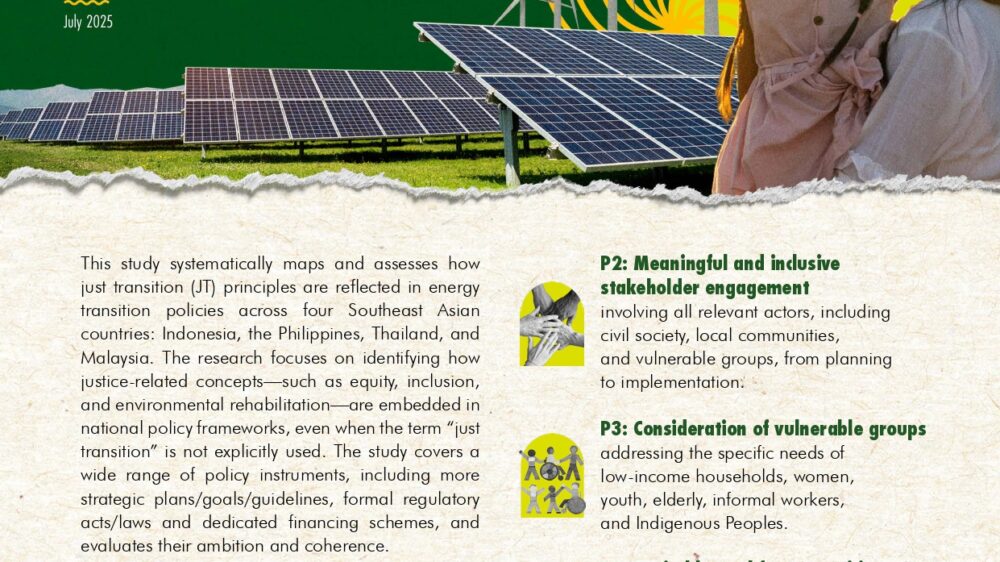
Briefer: Mapping of Just Transition supporting policies in Southeast Asia
This study systematically maps and assesses how just transition (JT) principles are reflected in energy transition policies across four Southeast Asian countries: Indonesia, the Philippines, Thailand, and Malaysia.
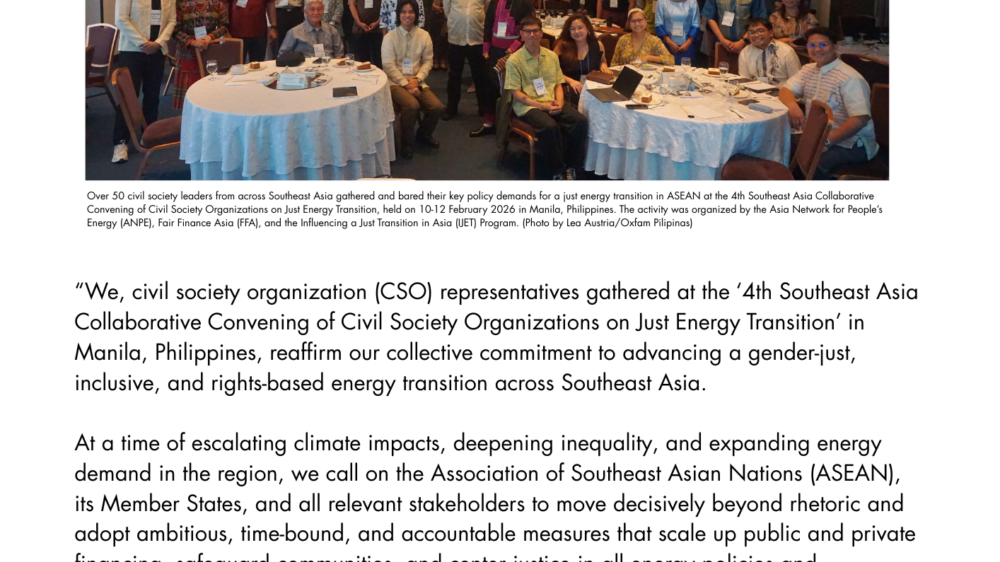
COMMUNIQUE: 4th Southeast Asia Collaborative Convening of Civil Society Organizations on Just Energy Transition
Civil society groups from Southeast Asia called on the Association of Southeast Asian Nations (ASEAN) member states and their energy ministers to “open their hearts to justice by putting people and gender equality at the center of energy governance and planning for a just and inclusive energy transition (JET) in the ASEAN region”.
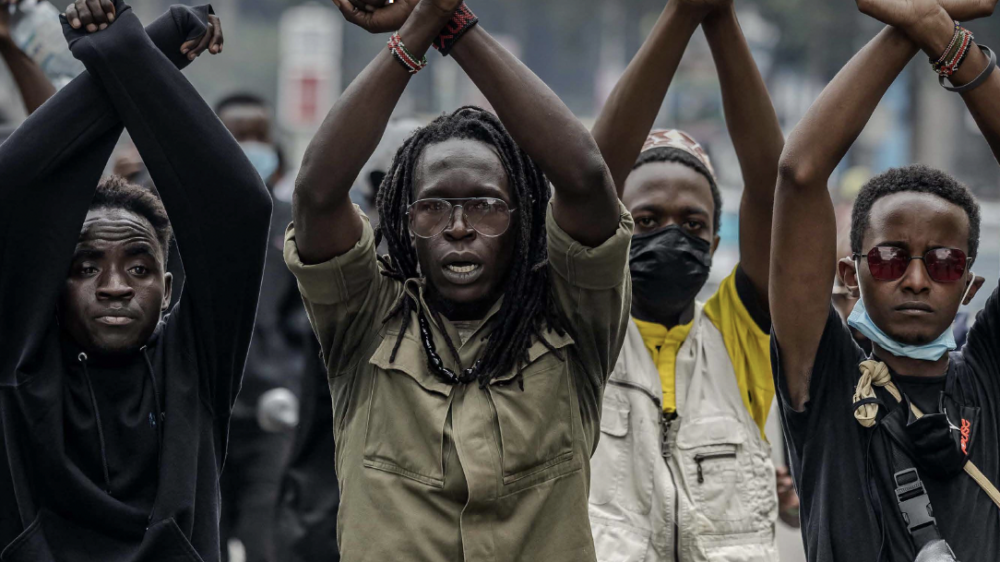
Resisting the Rule of the Rich: Protecting Freedom from Billionaire Power
Billionaire fortunes have grown at a rate three times faster than the previous five years. The number of billionaires has surpassed 3,000 for the first time, and the level of billionaire wealth is now higher than at any time in history. Meanwhile, globally, one in four people face hunger.
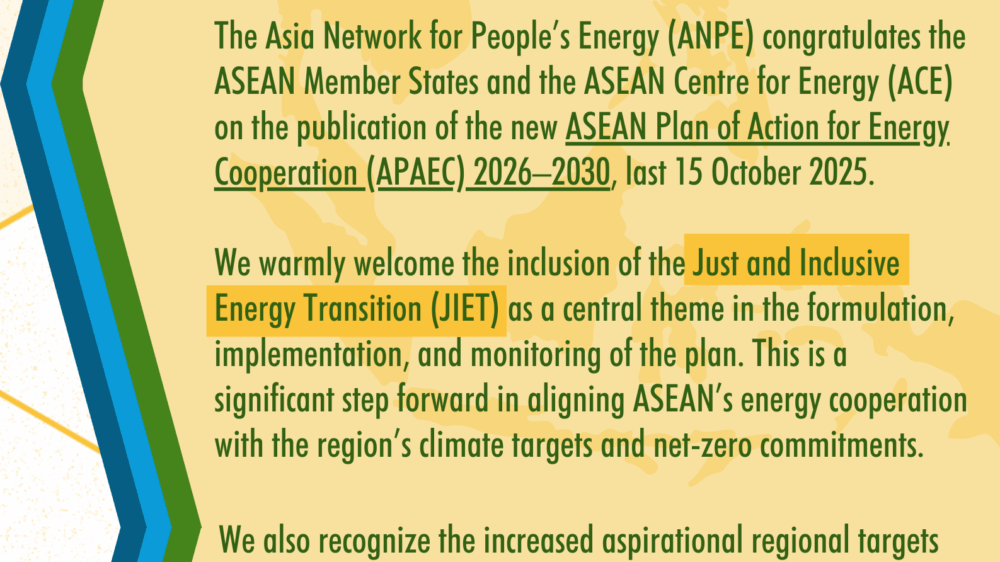
Guiding ASEAN’s Just and Inclusive Energy Transition: ANPE’s Statement on the APAEC 2026-2030
The Asia Network for People’s Energy (ANPE) congratulates the ASEAN Member States and the ASEAN Centre for Energy (ACE) on the publication of the new ASEAN Plan of Action for Energy Cooperation (APAEC) 2026–2030 last 15 October 2025.
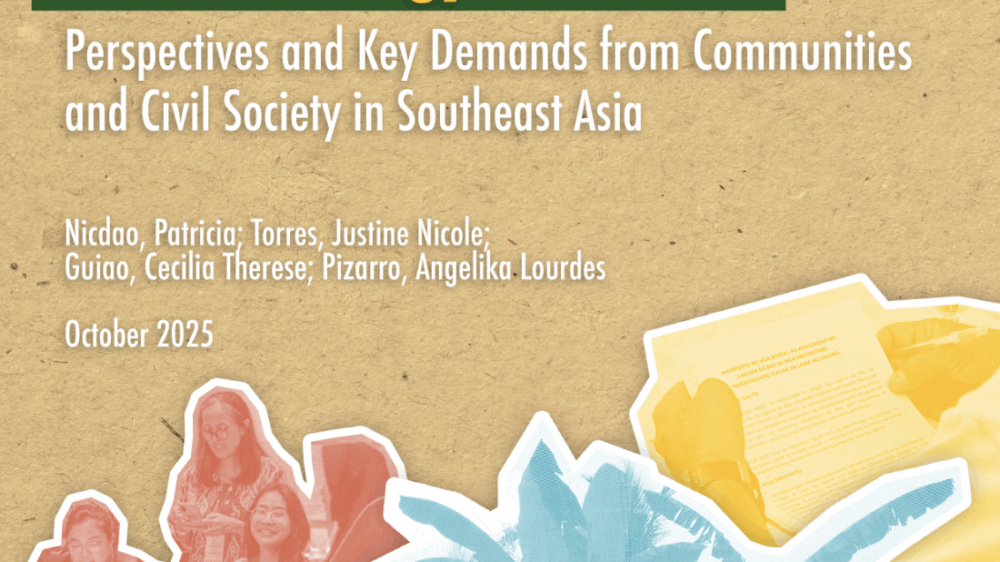
Socially Accountable Governance in Just Energy Transition (Interactive)
This report examines progress, gaps, and opportunities that exist in the intersections of governance, justice, and energy transition in Southeast Asia by examining the role of Social Accountability (SAcc) in utility-scale energy transition projects. Download this compressed interactive copy. The report is also available in full resolution and through an executive summary.
Socially Accountable Governance for Just Energy Transition
This report examines progress, gaps, and opportunities that exist in the intersections of governance, justice, and energy transition in Southeast Asia by examining the role of Social Accountability (SAcc) in utility-scale energy transition projects.