By Lot Felizco and Mary Joy Grefaldo
Recognizing and supporting care work is at the heart of a just and equal future: it makes all other work and opportunities possible, and when valued and shared fairly, it creates a society where everyone can thrive. As the international community marks the International Day of Care and Support, we reflect on the state of care in the Philippines and what we must do to move from growing recognition to lasting, systemic change.
Care has long been embedded in Oxfam Pilipinas’ humanitarian and development work. Our experience has shown us that care cannot be treated as a secondary concern in humanitarian response or development programming. It was clear to us that if women were to access more opportunities and realize their potential, it was important to address the unequal burden of unpaid care that constrains their choices. Our 2021 household care survey showed that women spend an average of 13 hours a day on unpaid care and domestic work, compared with eight hours for men. More than a disparity in time, this reveals a glaring inequality – not only in economic opportunity and security, but also in power to decide and shape their lives.
Policy recognition is growing, but we still lack a coherent care system
There are encouraging developments in the Philippine policy landscape, with several legislative proposals addressing care work and the care economy pending before Congress. At the Fourth ASEAN Women Leaders’ Summit in September 2026, the Philippine government committed to investing in care infrastructure and promoting a more equitable distribution of care work. These create openings for stronger policies and more sustained public investment. However, recognition across multiple laws, programs, and policy commitments does not automatically add up to a care system. A coherent care system requires a shared vision, clearly defined roles and mandates, adequate financing, and clear pathways for social accountability. Without these, care initiatives risk remaining fragmented.
Households and care workers continue to absorb the country’s care deficit
While policy recognition is growing, the responsibility for meeting care needs remains the burden of households and is often met through informal, undervalued work. This challenge will become more urgent as the country’s care needs change. The country’s ageing population will increase the need for long-term care and support. The question now is whether our care systems will be equipped to meet these needs, especially as the burden is not experienced equally.
Oxfam Pilipinas’ latest inequality report shows the Philippines remains highly unequal, with poorer households facing greater barriers to essential services and opportunities. When public services are insufficient or inaccessible, unmet needs are more likely to be absorbed by households through unpaid labor, particularly by women and girls.
Meanwhile, the people who provide paid care often face insecure livelihoods, inadequate compensation, and limited access to social protection. Addressing it requires us to recognize that care recipients and care providers are connected. We cannot secure quality care by neglecting the rights and well-being of the people who provide it.
Those who bear the greatest costs of care often have the least influence over decisions and resources
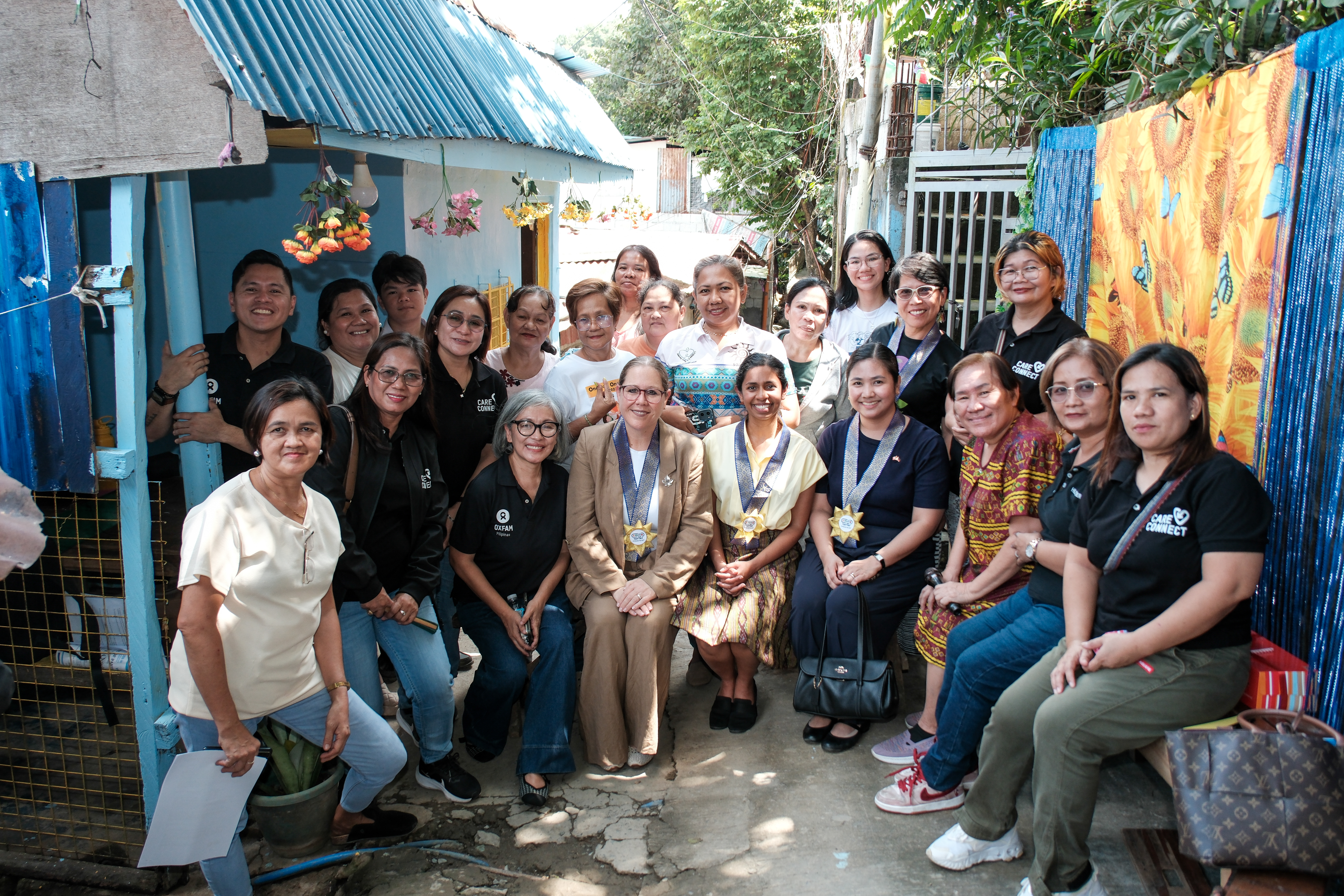
The people who carry the heaviest responsibilities for care are not always the people who decide how care services are designed, where resources are allocated, or which needs receive priority. This is why representation matters. Through our work with communities, partners, and local governments, Oxfam Pilipinas is helping build the capacity and influence of care champions to participate in these decisions. Experience shows the potential of local policy to connect care with livelihood support, health, social protection, scholarships, and infrastructure. This includes the work of local government units that have enacted local care ordinances, such as: Eastern Samar Province; Borongan City, Salcedo, and Quinapondan in Eastern Samar; Bagumbayan, Sultan Kudarat; Barangay Mao in Datu Abdullah Sangki, Maguindanao del Sur; and Taytay, Rizal.
Some of our key milestones working together include developing local care ordinances to address care burdens by allocating resources for time- and labor-saving equipment such as washing machines and dryers; safe water access; employment-related policies such as security of tenure for essential community workers; awareness-raising campaigns to shift norms on care; cash transfers for care-related social protection measures; and social accountability mechanisms such as care policy scorecards. The local ordinances provided concrete and practical solutions that move care responsibilities beyond the vicinity of the home and claim them as a duty of the wider community.
Social norms continue to frame care as a private, gendered responsibility
Even as policies evolve, expectations about who should provide care remain deeply gendered. Alongside care being understood primarily as women’s responsibility, is how women’s time tends to be treated as an unlimited resource. Their reduced participation in paid work can be seen as a personal choice rather than a consequence of unequal responsibilities and insufficient support. Men’s participation in care can be treated as exceptional rather than an expectation. And investment in care can be viewed as a private family concern rather than a social responsibility.
Changing these norms requires more than telling people that gender equality is important. We must demonstrate what shared responsibility looks like in practice, make alternative ways of organizing care visible, and create the conditions that allow people to adopt them.
Community care advocates act as facilitators of community conversations to shift norms on care – so that care is not seen exclusively as a woman’s role, nor as a private one. Care champions from Wao in Lanao del Sur; Biliran; Negros Oriental; and Taytay, Rizal are showing us the way.
The story points us to our bigger task: which is not simply to persuade people to think differently, but to help build the conditions in which a more equitable distribution of care becomes possible, practical, and sustainable.
Taken together, these four realities point to a clear conclusion. The Philippines has important foundations on which to build: growing policy recognition, an expanding evidence base, committed community advocates, and local initiatives demonstrating what care-responsive change can look like.
The challenge now is to connect these efforts and build the political will, public investment, and institutional capacity needed to sustain them.
First, establish a coherent and adequately financed national care economy framework. We need to move from fragmented commitments to a coordinated national direction. A Philippine Care Economy Framework will help clarify the roles of governments and stakeholders, identify priority policy areas, establish implementation strategies, and guide public investment. But a framework is only as strong as its implementation. We must ensure that care is reflected in national and local development plans, budgets, and sectoral priorities. We must also strengthen the evidence base so that public decisions respond to the actual needs of carers and care recipients everywhere.
Second, build a broad and organized constituency for care. Systemic reform requires more than technical solutions. This requires people and institutions willing and able to advance them. This constituency must be broad enough to recognize that care affects everyone, and organized enough to influence decisions about policies, services, and budgets.
Community care champions have an essential role in this effort. They bring lived experience into public decision-making and demonstrate what local solutions can achieve. We need to connect local innovations with national reforms, and community demands with decisions about public financing.
Our goal should be to sustain a movement for care. Because strong constituency for care will help ensure that care remains a public priority.
Third, change the public narrative: care is a human right and a public good. We must change how care is understood. As long as care is treated primarily as a private responsibility, the burden of addressing its gaps will continue to fall on individual families, particularly women. We need a narrative that makes care visible as essential social and economic infrastructure—fundamental to human dignity, gender equality, decent work, and inclusive development. This means communicating not only the scale of unpaid care, but also its consequences – from the time women lose, the opportunities people cannot pursue, the pressures on care workers, to the needs that remain unmet when services are inaccessible. We also need to show that change is possible, and build public understanding and political support for the changes required to make care systems work for everyone.
We must move together—because a truly free society is built on care. Ang lipunang malaya, bunga ng pag-aalaga.