Care Connect champions drive community-led care reforms
October 24, 2026
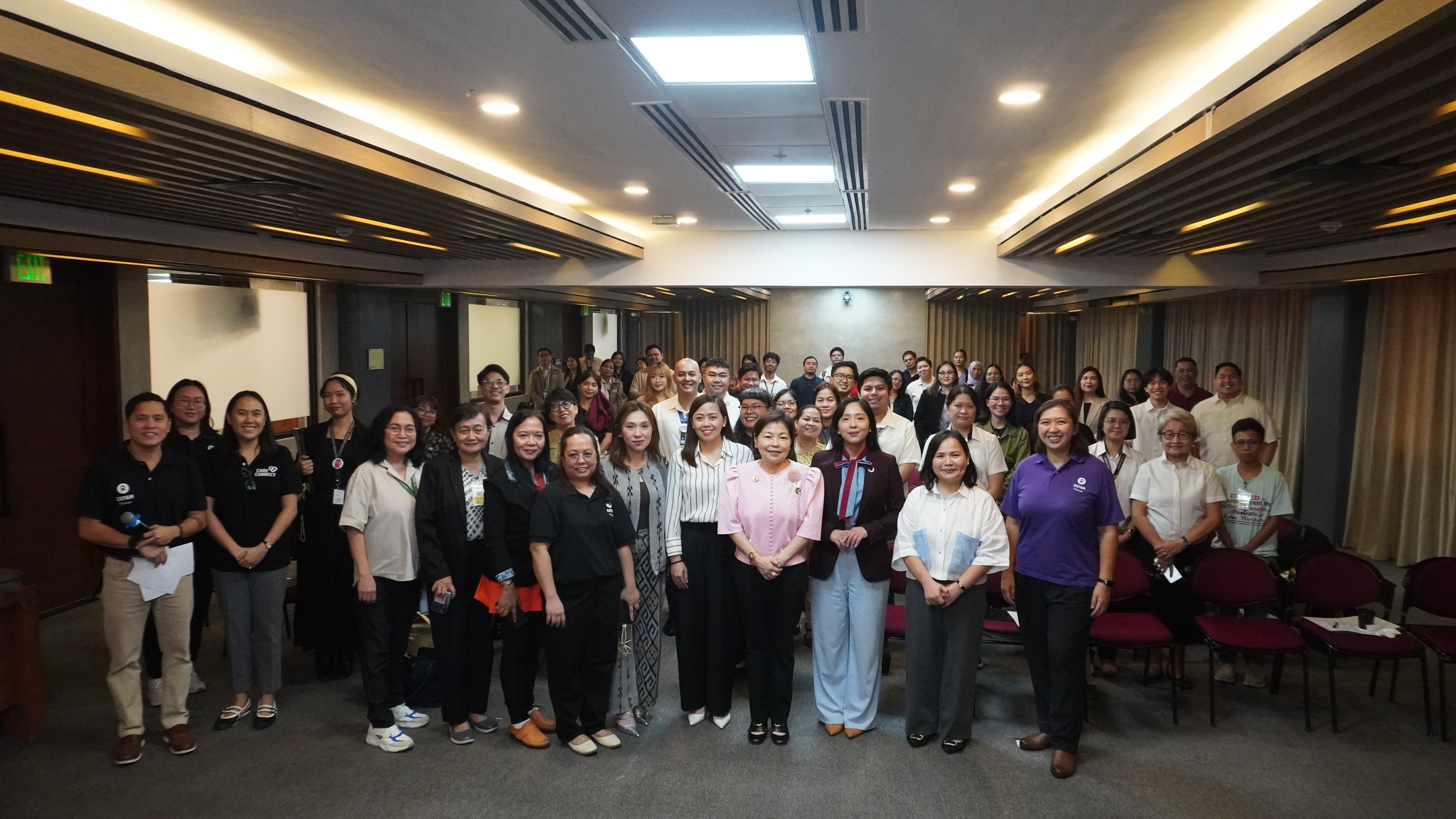
As the Philippines faces growing care demands, community advocates in Taytay, Rizal, and Quezon City welcomed representatives from Global Affairs Canada (GAC) to showcase community-driven initiatives that help strengthen care systems.
Community-led action is advancing care reforms —from local ordinances to the national agenda
Quezon City – As the Philippines faces growing care demands, community advocates in Taytay, Rizal, and Quezon City welcomed representatives from Global Affairs Canada (GAC) to showcase community-driven initiatives that help strengthen care systems.
These efforts echo the Philippine government’s commitment at the 4th ASEAN Women Leaders’ Summit in September 2026 to invest in care infrastructure and promote a more equitable distribution of care work.
The visit highlighted progress under Care Connect: Action for Care Workers in the Philippines and Indonesia, a four-year initiative supported by Global Affairs Canada and Oxfam Canada. The project advances the rights and needs of people engaged in paid and unpaid care work, particularly women and girls. It is co-implemented by Oxfam Pilipinas, the Pambansang Koalisyon ng Kababaihan sa Kanayunan (PKKK), and the Labor Education and Research Network (LEARN) across Metro Manila, Bulacan, Lanao del Sur, Zamboanga City, Biliran, and Rizal.
Community action delivers tangible gains
During the field dialogues, GAC representatives saw how community organizing is improving support and working conditions, translating into concrete gains for care workers and caregivers.
In Taytay, Rizal, consultations with women’s organizations and community advocates, including PKKK, have helped shape a municipal Care Ordinance to strengthen support for unpaid caregivers and include care in local development planning. The initiative also promotes the use of Oxfam Pilipinas’ Care Policy Scorecard to help communities assess local care policies and hold local governments accountable for their care commitments.
Organizing care workers and strengthening their advocacy skills have also improved conditions for paid care workers. Through advocacy led by LEARN and care workers in San Jose del Monte, Bulacan, domestic workers’ minimum monthly wages rose from ₱7,000 to ₱7,800 in 2025, and barangay health workers saw their monthly allowances double from ₱2,000 to ₱4,000.
These advances are supported by Care Connect’s growing base of evidence, including a nationwide survey of the working conditions of domestic workers and barangay health workers. The unpublished survey found that nine in 10 surveyed domestic workers lacked formal employment contracts, underscoring persistent gaps in labor protection. These findings inform advocacy for stronger labor standards, including proposed amendments to the Batas Kasambahay (Republic Act No. 10361).
Together, these local efforts support calls to recognize care as a public good and essential an essential part of the economy.
At the national level, Oxfam Pilipinas and civil society partners are working with the Philippine Commission on Women (PCW) to advance the Philippine Care Economy Framework, currently after a series of community and stakeholder consultations.
“Communities are at the heart of care. What we are seeing in local initiatives is that when care workers and community advocates are organized and equipped to advocate for themselves, change happens. Our task is to build on these gains and keep connecting local action with the broader reforms needed to recognize and value care,” said Lot Felizco, Executive Director of Oxfam Pilipinas.
Building momentum for lasting care Since its launch in 2024, Care Connect has trained 1,841 stakeholders across government, academia, civil society, and the private sector to become care champions, including 986 persons equipped with advocacy skills to advance the rights of care workers and demand decent work. The project also seeks to strengthen support for local care champions, help communities share successful approaches across project areas, and build wider support for care reform through collective advocacy and public engagement.
FacebookTweetLinkedIn Participants from government, civil society, research, development, private, and the care sector gather at the House Forum on Care Work and the Care Economy to strengthen collective action towards policies and investments that recognize, value, and support care. Quezon City, Philippines — In a landmark move, the House of Representatives hosted its first-ever Forum […]
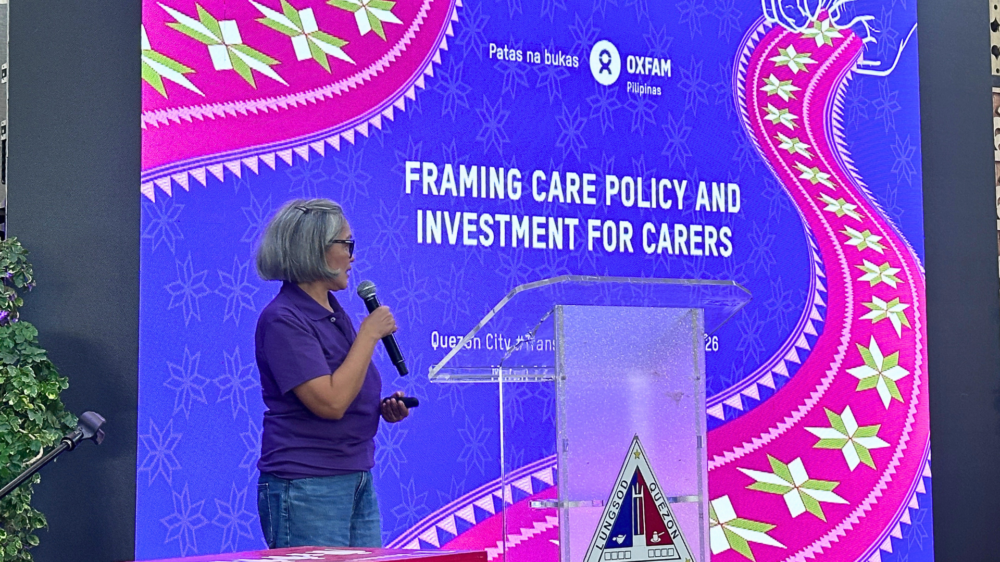
Executive Director Maria Rosario “Lot” Felizco shared Oxfam’s decade-long journey in advancing care at the Quezon City Transformative Care Policy and Practice Conference on 12 March 2026
Manage Cookie Consent
To provide the best experiences, we use technologies like cookies to store and/or access device information. Consenting to these technologies will allow us to process data such as browsing behavior or unique IDs on this site. Not consenting or withdrawing consent, may adversely affect certain features and functions.
Functional
Always active
The technical storage or access is strictly necessary for the legitimate purpose of enabling the use of a specific service explicitly requested by the subscriber or user, or for the sole purpose of carrying out the transmission of a communication over an electronic communications network.
Preferences
The technical storage or access is necessary for the legitimate purpose of storing preferences that are not requested by the subscriber or user.
Statistics
The technical storage or access that is used exclusively for statistical purposes.The technical storage or access that is used exclusively for anonymous statistical purposes. Without a subpoena, voluntary compliance on the part of your Internet Service Provider, or additional records from a third party, information stored or retrieved for this purpose alone cannot usually be used to identify you.
Marketing
The technical storage or access is required to create user profiles to send advertising, or to track the user on a website or across several websites for similar marketing purposes.