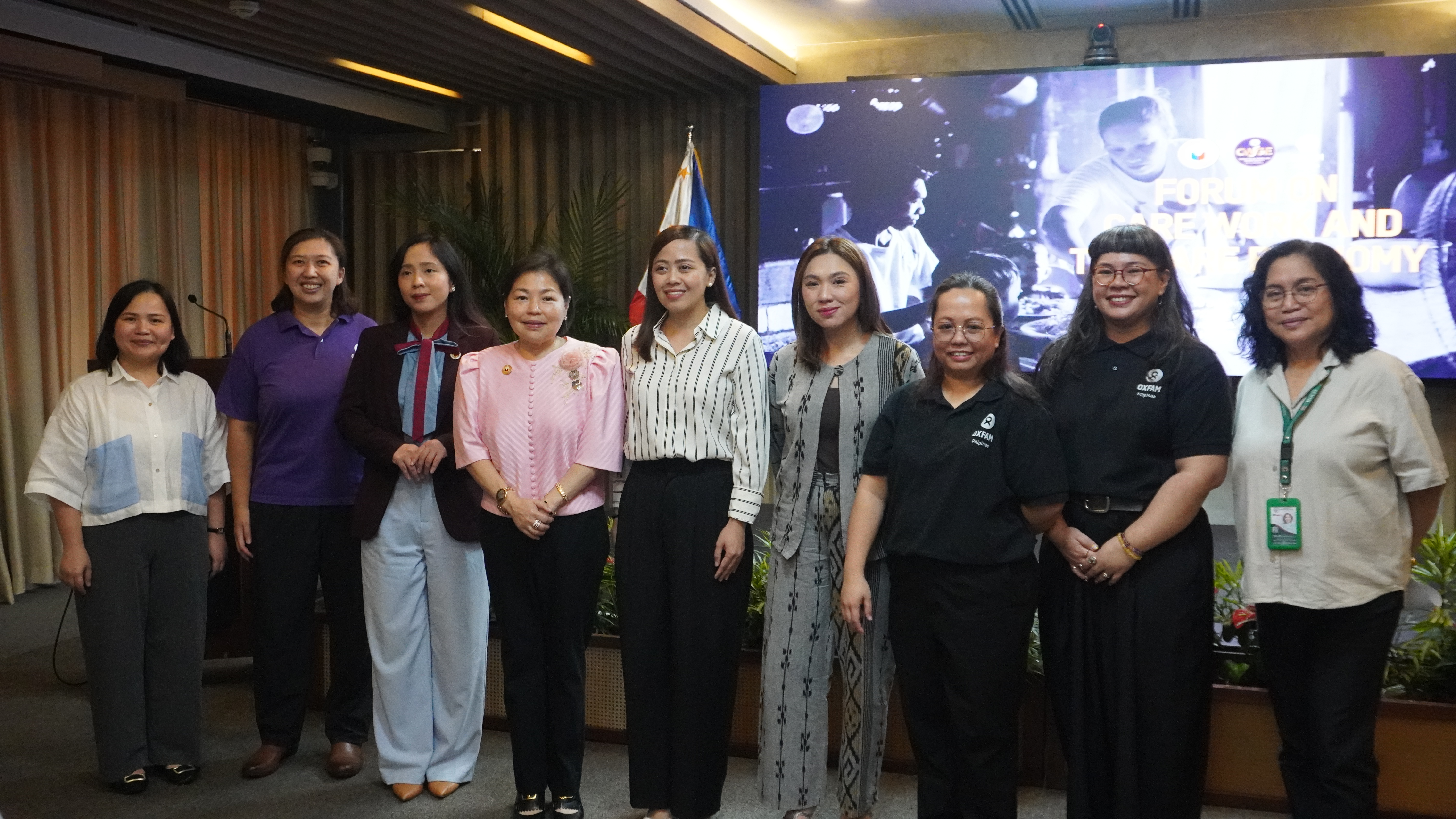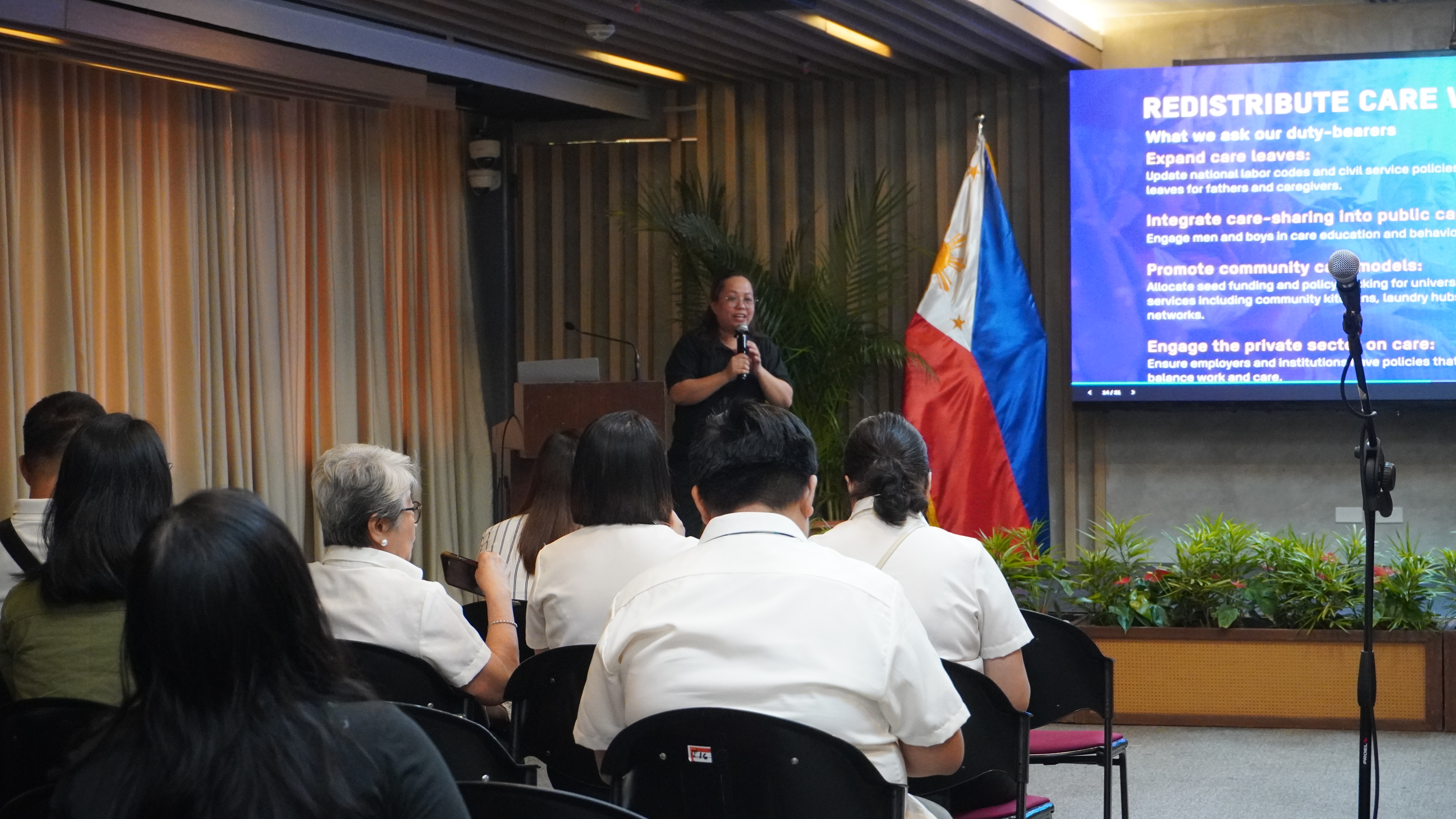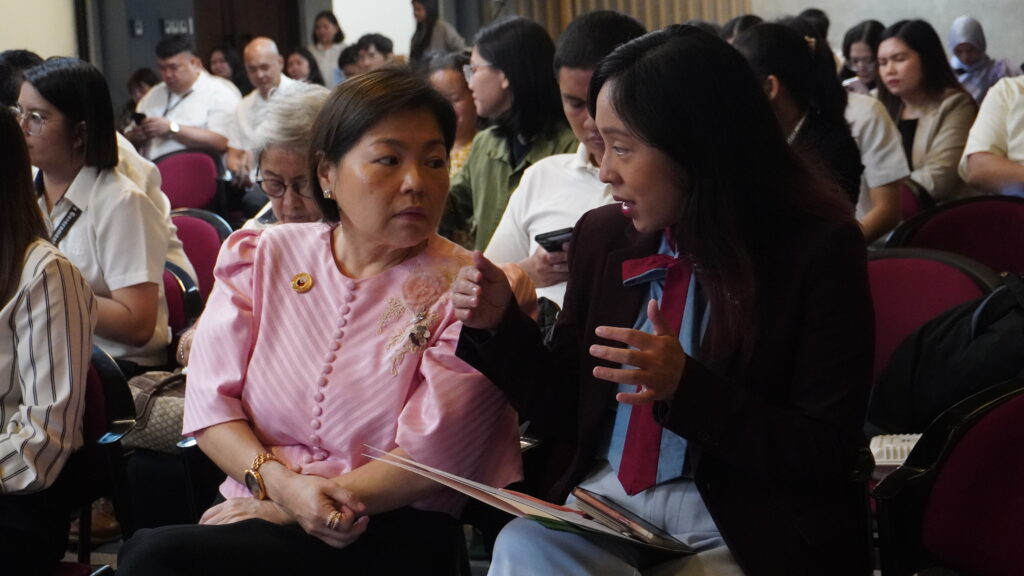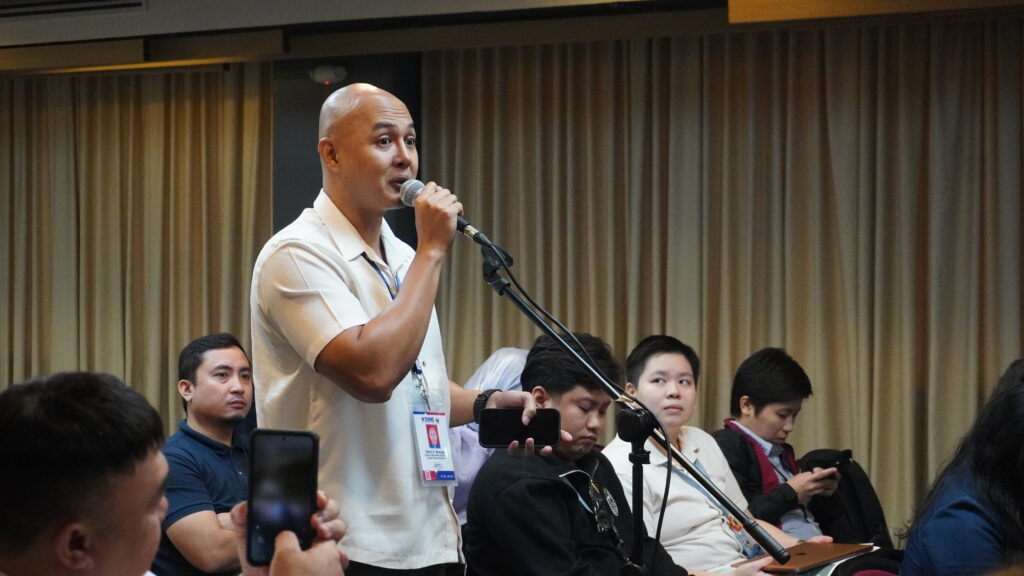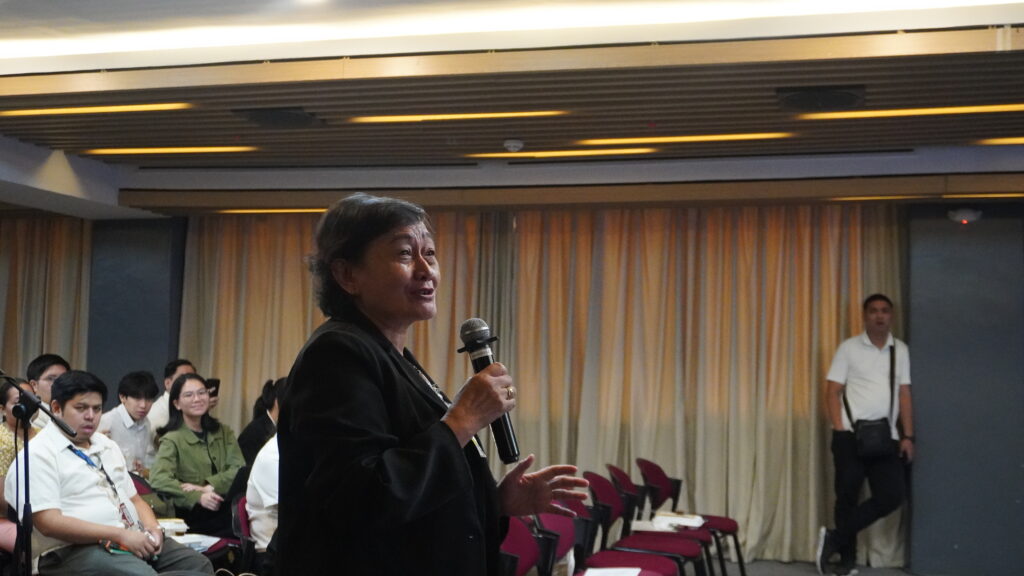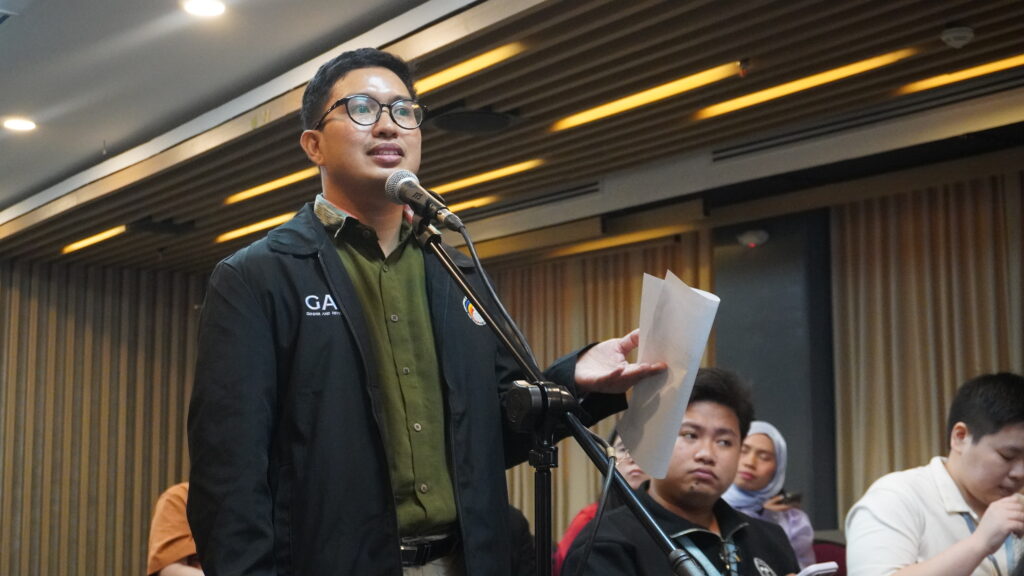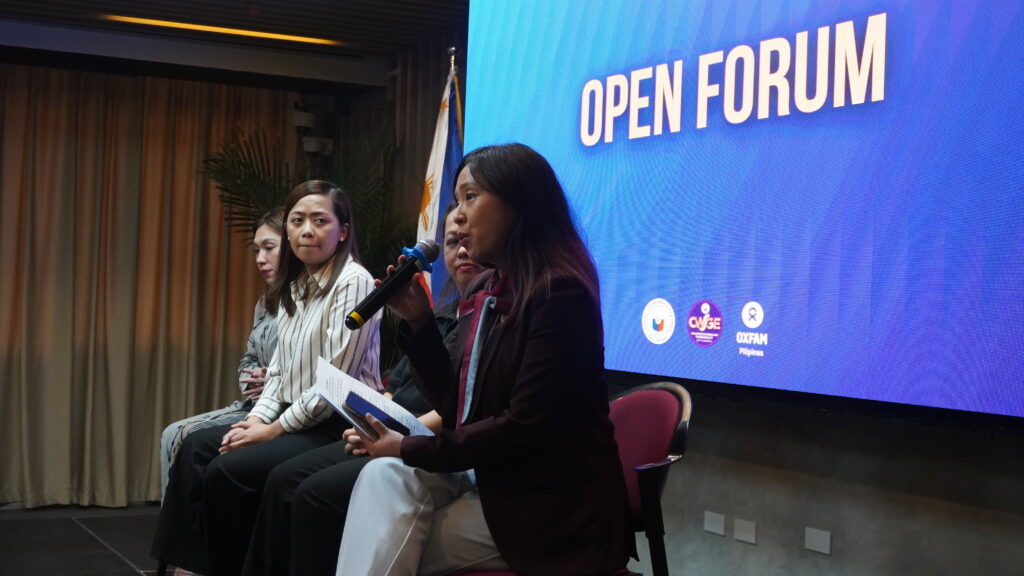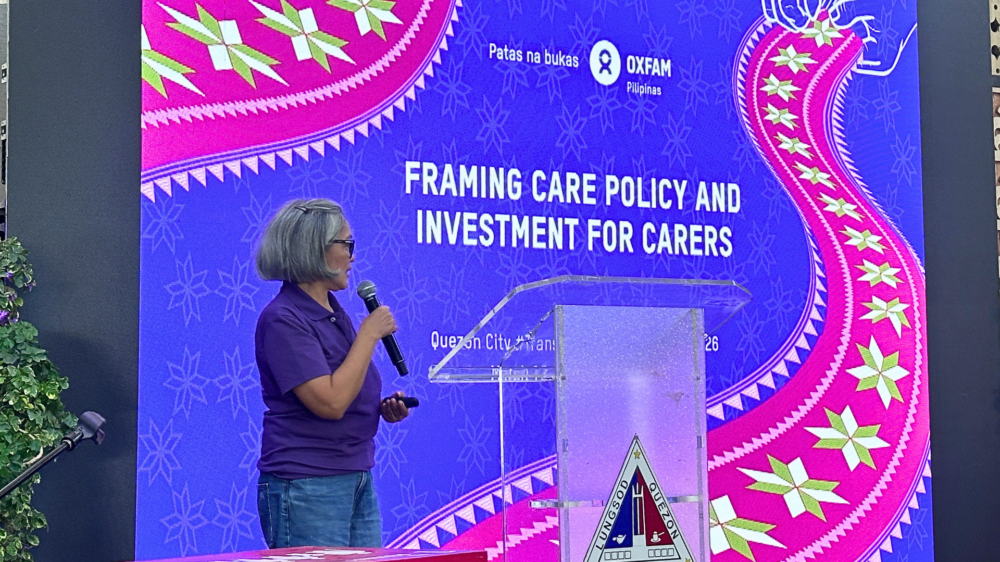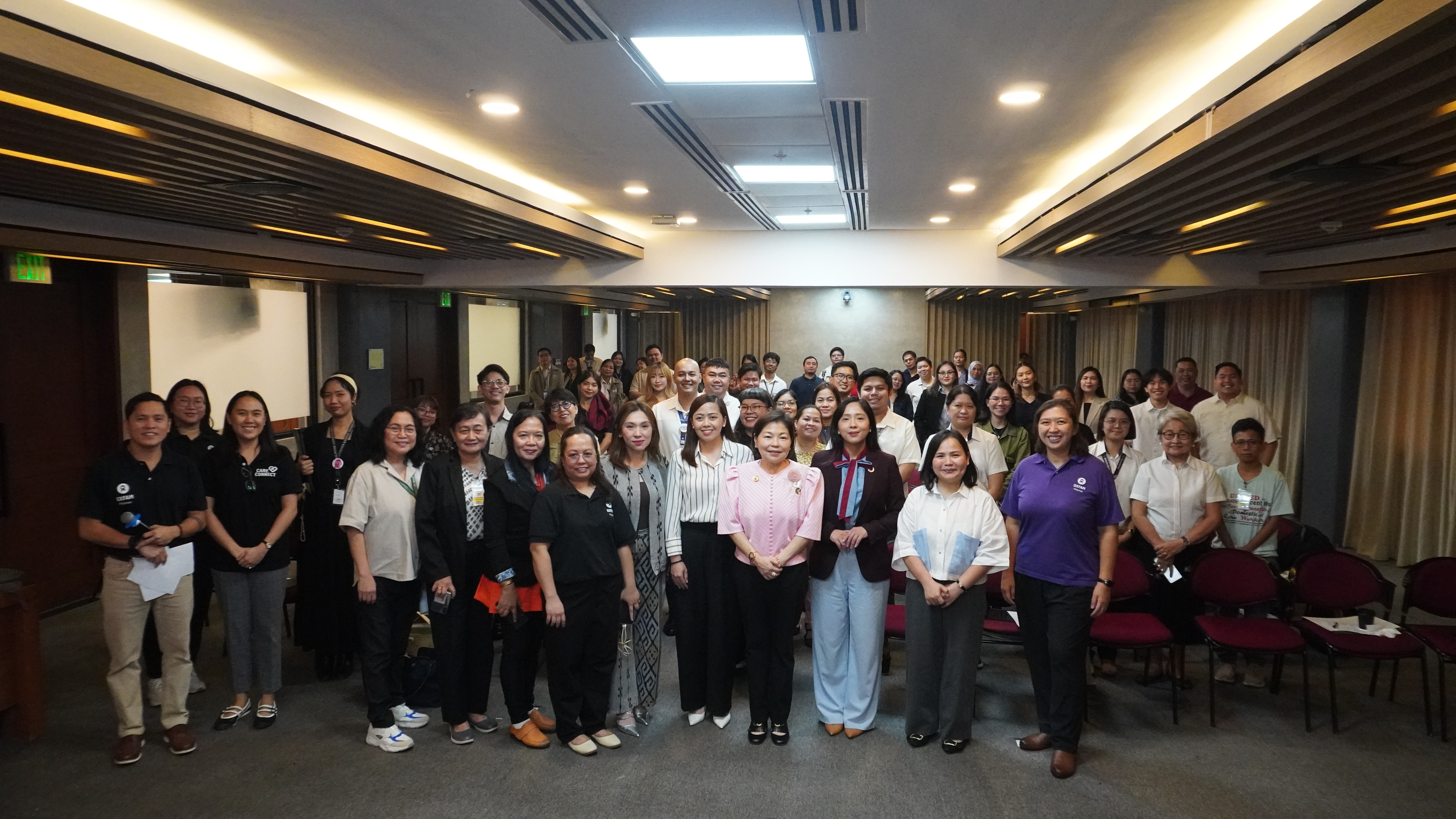
Participants from government, civil society, research, development, private, and the care sector gather at the House Forum on Care Work and the Care Economy to strengthen collective action towards policies and investments that recognize, value, and support care.
Quezon City, Philippines — In a landmark move, the House of Representatives hosted its first-ever Forum on Care Work and the Care Economy on 16 September, bringing together lawmakers, local governments, national government agencies, civil society, researchers, development partners, caregivers, and care workers to advance needed policy conversations. Convened by the Office of Representative Ann Matibag in partnership with Oxfam Pilipinas and the House Committee on Women and Gender Equality (CWGE), the forum examined care as a human right and essential social and economic infrastructure and called for immediate legislative action.
“Care is the invisible infrastructure of daily life and of our economy. Yet much of the work stays unseen, unpaid, or undervalued. And in every Filipino household, much of it is still carried by women,” Rep. Matibag said in a statement. “If care sustains our families, our communities and our economy, then it deserves serious attention in our public policy conversation.”
The forum coincides with rising interest in care. Congress is considering multiple measures, such as the Care Economy Support and Recognition Act (House Bill 9493) and Unpaid Care Workers Equity and Empowerment Act (House Bills 2476 and 7115, and Senate Bill 161). The Philippine Commission on Women has also made care a legislative priority and has partnered with Oxfam Pilipinas to co-develop the Philippine Care Economy Framework.
Ivy Panganiban, Gender Portfolio Manager of Oxfam Pilipinas, explained how the care agenda translates into policy and practice, guided by the International Labour Organization’s (ILO) 5R Framework for Decent Care Work—Recognize, Reduce, Redistribute, Reward, and Represent. Building on Oxfam Pilipinas’ decades’ worth of experience on care, she also highlighted priority measures to strengthen protections for care workers, including the Magna Carta of Barangay Health Workers, measures strengthening the rights and welfare of day care workers, and amendments to the Batas Kasambahay (RA 10361), alongside policies connecting care with climate justice and anticipatory action.
Local government leaders showcased care localization and innovations as proof of care-responsive services. Quezon City Councilor Ma. Eleanor R. Juan highlighted the city’s pioneer “Care Framework,” geospatial mapping of care needs, and its proposed Care for Carers Ordinance. Taytay, Rizal Councilor Joan Calderon showcased the municipality’s expansion of social services and its inclusive, consultative roadmap toward drafting its own local care ordinance. Taytay is one of the key project areas of Oxfam Pilipinas’ Care Connect project, which works to value care work as the work that makes all other work possible and to institutionalize care programs and policies across all levels of government.
Present were Rep. Florabel Yatco of Nanay Party-list, chairperson of the Committee on the Welfare of Children and vice-chairperson of the Committees on Women and Gender Equality and Poverty Alleviation; Rep. Sarah Elago of Gabriela Party-list; and staff of Tingog Party-list, Manila Teachers Party-list, and legislators representing Bulacan, Cavite, and Apayao. The discussion addressed localizing care ordinances, strengthening care data, institutionalizing social services, and ensuring adequate resources for care-related programs.
At the open forum, Rep. Sarah Elago urged civil society organizations to participate in upcoming budget hearings and support increased allocations for critical care programs, including Early Childhood Care and Development.
“We heard from different perspectives, saw what is being done at local and national levels, and identified areas that deserve further attention—that is a meaningful place to begin,” said Rep. Elago. “Care often happens quietly. I hope we leave today seeing it a little more clearly, understanding it a little more deeply, and listening more closely to the people who provide it.”
Oxfam Pilipinas and partners pledged to collaborate with the House Committee working groups to ensure care workers’ voices shape the national agenda.
About Oxfam Pilipinas:
Oxfam Pilipinas is a feminist, rights-based organization that works with local partners to create a more just, gender-equal, and inclusive society. It continues to champion gender justice and equitable care systems in the Philippines through its Care Connect and EmpowerHer projects.
Media Contact:
Mai Lagman
Manager, Policy, Advocacy, and Communications
Oxfam Pilipinas
communications@oxfam.org.ph