Written by Ronan Renz Napoto
Every 8th of November, I find myself returning to memories I would rather leave untouched.
The sting of the needle-like rain piercing through my skin and deafening howling of the winds continue to linger in my body. The sight of how our house has been torn apart and how our roofs almost cut our heads as they swung is still vivid in my mind. Hearing how our loved ones struggled to keep themselves afloat from the raging storm surge and breaking infrastructure has remained in my consciousness. It was never easy. And even years after, when we thought we would feel a little better, it is still never easy.
The weight of our half-dried tears and the quiet ache of loss continue to linger. Perhaps people in my community, now thirteen years older, each carry their own stories of how deeply the disaster changed their lives.
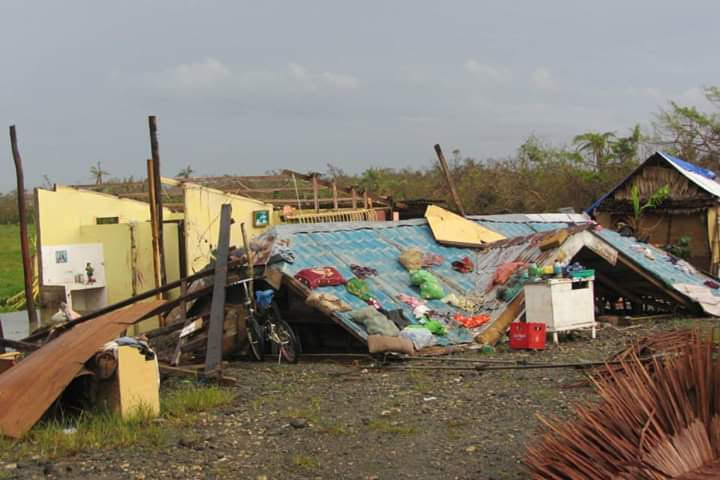
Across Eastern Visayas, from the coastlines of Leyte and Samar to the communities devastated by the storm surge, Yolanda left scars that remain visible not only in our landscapes but also in our collective memory. While our experiences may differ, we continue to share the burden of living with what the disaster took away and what it revealed about the conditions that made us vulnerable in the first place.
For some, the absence of family members who were never found remains a wound carried quietly in the deepest depths of our hearts. For others, the search for a proper resting place for their loved ones may have perhaps never truly ended.
Honestly, it is exhausting to revisit these memories and half-buried traumas. It is no small thing to confront the fears, grief, and uncertainty that accompanied that day. It means remembering how we struggled to hold on to our own lives while witnessing others lose theirs.
Every year, we honor those we lost, the painful memories, and the lives forever altered. We remember not only the disaster itself but also the grief that has remained, sometimes buried beneath the demands of everyday life, sometimes layered by another difficult experience.
But every November 8, we are asked to remember. And perhaps more importantly, we are asked to look back and confront another difficult question: after everything we endured, what have we actually done to rebuild our lives and ensure that this never happens again?
What recovery revealed
Thirteen years later, our streets have long been cleared of debris, our roofs have been rebuilt, and new establishments have emerged; reconstruction has become the priority. Governments, development organizations, businesses, and communities worked to rebuild what had been lost. Institutions rolled out recovery programs, livelihoods slowly returned, and our landscapes began to change.
We remained. We rebuilt. We carried what was left of our lives and made something from it.
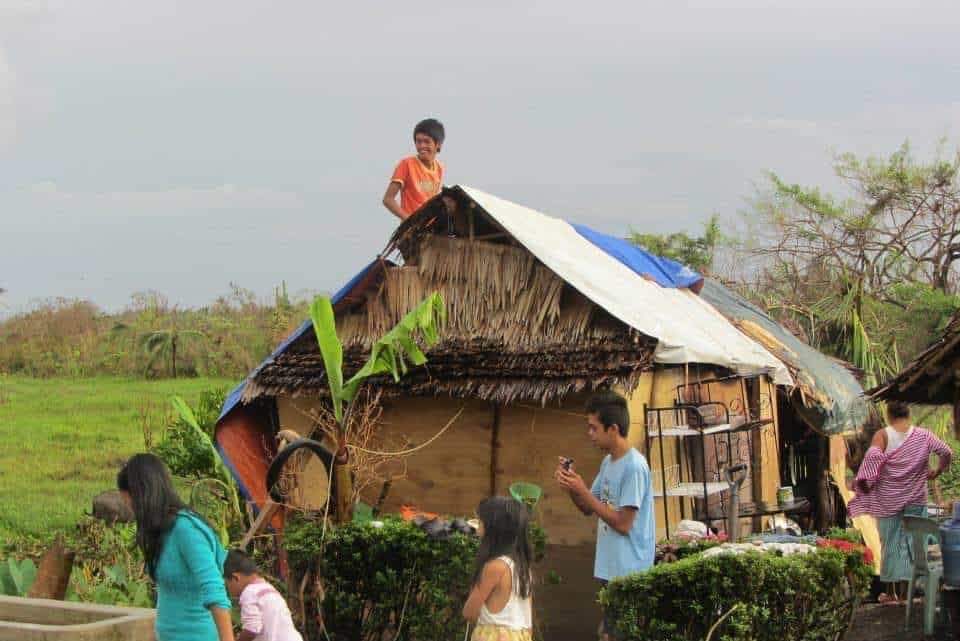
Looking at these developments, it is easy to think that perhaps we have moved forward, improved, or gotten better. Our physical landscape has indeed changed and is often presented as evidence of progress. Yet a rebuilt road, a new commercial center, or a growing skyline does not automatically mean that people are safer, healthier, or more secure than they were before.
These developments may provide sources of income and contribute to economic activity, but they do not necessarily translate into better everyday lives for everyone. We still struggle with many of the issues that shape daily life: inadequate housing, long queues for medical assistance, insufficient evacuation shelters, and wages that barely sustain families until the next payday. Access to essential services too often remains entangled in political patronage rather than guaranteed as a right.
This is where we must look beyond the visible signs of progress. Rebuilding should never be measured solely by how many structures have been constructed, how many businesses have opened, or how much investment has entered our communities. It must also be measured by whether people have better access to basic services, more secure livelihoods, safer homes, and greater opportunities to live with dignity.
Because if thirteen years of rebuilding have not fundamentally changed the conditions that made us vulnerable in the first place, then perhaps we need to question what kind of recovery we have actually achieved.
The lessons we refuse to learn
Beyond the death tolls, damaged infrastructure, and unnamed grave markers, what did Yolanda truly leave behind?
It left us lessons about vulnerability. Lessons about whose lives are protected and whose lives are treated as expendable. Lessons about the consequences of neglecting our ecosystems, ignoring scientific warnings, and allowing ‘development’ to prioritize profit over people.
Yet thirteen years later, many of these lessons remain unlearned.
Yolanda was not only a tragedy. It was also a stark reminder of how the climate crisis and inequality reinforce one another. It showed us what happens when extreme weather collides with inequality, weak institutions, environmental degradation, and inadequate preparedness. The continued tragedy is that many of those underlying conditions remain with us today.
The problem is not a lack of knowledge. Yolanda taught us, in the most devastating way imaginable, what makes communities vulnerable. We learned the importance of preparedness, safer housing, functioning public services, environmental protection, and accountable governance. We have seen what happens when these responsibilities are neglected.
And yet, thirteen years later, many of those same conditions persist.
Businesses continue to find opportunities to profit from our suffering. Development activities move forward even as existing vulnerabilities remain unresolved. Public resources that should strengthen our communities are still subject to questions of transparency and accountability. In some cases, the very processes meant to support recovery and development risk reproducing the inequalities that made people vulnerable in the first place.
Perhaps the most difficult thing to confront is that we have become too accustomed to rebuilding one disaster to another that we have stopped questioning why the same vulnerabilities continue to put us in harm’s way.
And this is where the experience of Yolanda becomes bigger than the memory of one super-typhoon. It forces us to recognize that disasters do not always end when the immediate threat has passed. Their consequences persist in the conditions we continue to live with, and in the systems that determine whether we are protected or left to fend for ourselves.
The new face of Yolanda
Perhaps this is why, thirteen years later, it feels like Yolanda has never really left us.
It remains with us in different forms, frequencies, and magnitudes, masked under different names and experienced through different realities.
We often imagine disasters as singular events: a typhoon that makes landfall, a storm surge that destroys homes, or a calamity that eventually passes. But for many communities, disasters no longer arrive only through typhoons. They have become embedded in our everyday lives.
They arrive as soaring food prices that force families to skip meals; prolonged droughts that leave farmers uncertain about their harvests; increasingly frequent floods that drown our homes and fields; heat-related illnesses that threaten lives; livelihoods lost while corporations continue to profit; and climate funds that never seem to reach the communities most at risk.
These are the super-typhoons that increasingly shape our everyday lives. Unlike the Yolanda we remember, these super-typhoons do not arrive in a single day. They unfold slowly, shaping people’s lives through accumulated pressures and inequalities that make survival increasingly difficult.
Before the term climate anxiety became part of our vocabulary, perhaps many of us on the frontlines had already been experiencing it. We simply did not have the luxury of naming it because we had to survive first.
And while these realities are becoming increasingly common, they should never be accepted as ordinary or inevitable. They slowly wear us down, making our everyday lives harder to live. What makes this even more troubling is that many of these conditions can be anticipated, prevented, and addressed through meaningful public action and global commitments.
Super-typhoons may not always be making landfall in our communities, but that does not mean we are free from their threats. Climate change is already shaping how we eat, work, earn, live, and survive. It is no longer just about the next storm. It is about the growing difficulty of living through conditions that make an already difficult life even harder.
And these conditions are not experienced equally.
Inequality and climate injustice
Coming from a poor community, I have seen and experienced how poverty and vulnerability reinforce one another. When a disaster strikes, those who have fewer resources are often the ones who take the longest to recover. They have fewer options for safer housing, less financial capacity to rebuild, and limited opportunities to invest in the protection and preparedness that could help them withstand the next crisis.
Meanwhile, those with greater wealth, influence, and access to decision-making are often better positioned to protect themselves, recover quickly, and shield themselves from the worst consequences of climate disasters.
This is what makes climate change a question of inequality and justice, not just environmental protection.
Climate change is often described as an environmental crisis, but for communities like ours it is equally a crisis of governance, development, and human dignity. The question is not only whether the climate is changing. The question is who bears the consequences, who receives protection, who is left to face the risks alone, and who continues to profit from other people’s suffering.
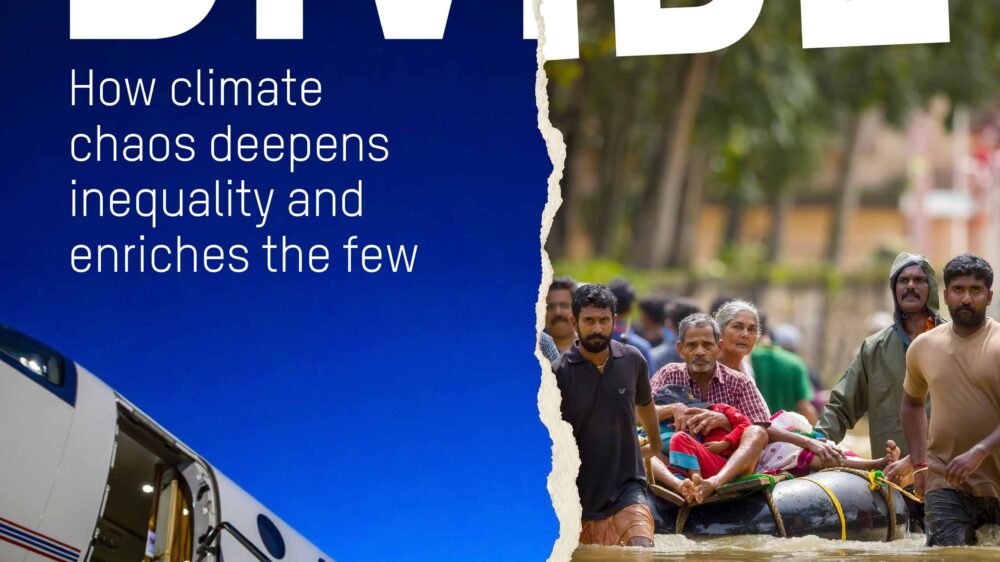
Oxfam’s Disaster Divide report reminds us that climate disasters are also inequality machines. Financial capacity determines who can access safer housing, better protection, and the resources needed to bounce back after every disaster. For low-income communities like ours, the resources to prepare, respond, and recover are far more limited.
This inequality is further reinforced when public resources intended to protect communities fail to reach the people who need them most. While we continue to ask where climate funds and other resources for climate mitigation and adaptation go, persistent corruption concerns surrounding public infrastructure and development spending raise serious questions about transparency and accountability.
Funds intended for flood control, improved roads, emergency shelters, and other essential infrastructure should safeguard our communities, not become opportunities for personal enrichment or political gain. Every peso lost to corruption or poor governance is a peso not spent on stronger evacuation centers, safer schools, functioning health facilities, climate adaptation programs, and the protection of communities facing increasingly severe climate risks. When these resources are misused or poorly managed, it is we, the ordinary people, who bear the consequences.
At the same time, the pursuit of profit continues to take precedence over people’s welfare. Even as inflation rises and poverty is deeply felt in our everyday lives, some businesses and powerful interests continue to find ways to cash in on climate-driven shocks, turning other people’s vulnerabilities into opportunities for profit.
The people who contribute the least to the climate crisis are often the ones who suffer the most, while those with the greatest resources and influence have more ways to shield themselves from its consequences.
This is precisely why climate justice cannot be separated from ending poverty and inequality, and pushing for better governance and accountability. It is not simply about preparing for the next disaster or building more resilient communities. It is also about confronting the systems that make some people more vulnerable than others, demanding accountability from those entrusted with public resources, and ensuring that the benefits of development and climate action reach the people who need them most.
Where do we go from here?
Thirteen years after Super-typhoon Yolanda, perhaps the question is no longer whether we have recovered from the storm.The deeper question is whether we have transformed the conditions that allowed so much suffering in the first place.
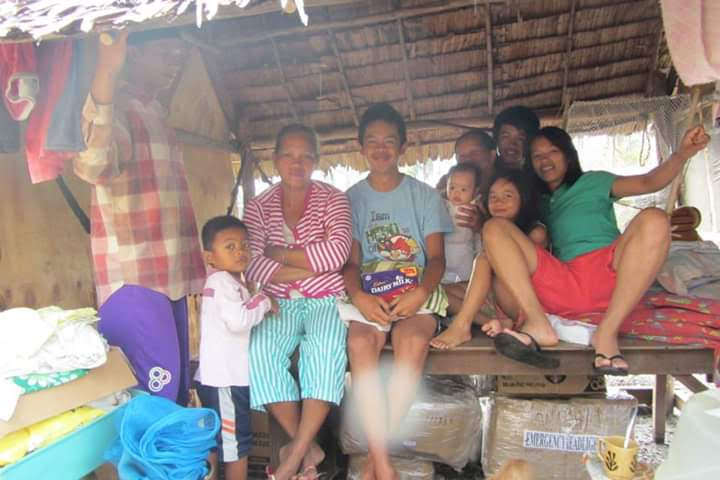
Have we built communities that are safer, fairer, and more prepared? Have we demanded accountability from those entrusted with public resources and those fueling the climate crisis? Have we addressed the inequalities that continue to determine who suffers most during every disaster? Have we made development work for the people, rather than asking people to bear the costs of development?
Or have we merely become accustomed to living with new forms of the same crisis?
I have participated in many visioning exercises after Yolanda, and we have always tried to imagine something hopeful: a better future, safer communities, and a world where disasters no longer leave us devastated. I still believe in that possibility. But perhaps it is also time to be more honest about what needs to change to get there.
We cannot keep asking communities to be resilient without asking institutions to be accountable. We cannot keep celebrating recovery while basic needs remain unmet. And we cannot keep calling something progress when the benefits are concentrated among a few while the burdens continue to fall on those with the least.
I do not think we should be expected to have all the answers. Thirteen years later, many of us are still grieving, still rebuilding, and still trying to make sense of what happened and what continues to happen around us.
But perhaps we owe it to those we lost, and to those who continue to live with the consequences, to refuse to accept that this is simply how things are supposed to be.
Perhaps the greatest tribute we can offer is not simply to remember the disaster, but to ensure that future generations do not inherit the same vulnerabilities we continue to live with today. We honor Yolanda not only by remembering the lives we lost, the families we left behind, and the communities forever changed. We honor them by refusing to accept a future where vulnerability is treated as normal, where recovery benefits only a few, and where survival remains the burden of those with the least.
Thirteen years later, perhaps the strongest lesson Yolanda leaves us is this: The disaster was never only the storm. It is every system that continues to place people in harm’s way long after the winds have died down.
It is every missed opportunity to protect our communities. Every public resource diverted away from the people it was meant to serve. Every policy that prioritizes profit over people. Every decision that treats vulnerability as inevitable rather than preventable.
Yes, we survived. But we deserve more than just survival.
###
About Ronan Renz Napoto
Ronan Renz Napoto is a climate justice advocate and development practitioner from Eastern Samar, Philippines. A survivor of Super Typhoon Yolanda (Haiyan), he has dedicated his work to advancing climate justice, community resilience, and equitable development. He currently serves as a Climate Justice Portfolio Officer at Oxfam Pilipinas, where he works on climate justice and just energy transition initiatives. With a background in Industrial Engineering and further studies in Development Sociology, his advocacy focuses on promoting equitable access to renewable energy, strengthening the resilience of vulnerable communities, and addressing the systemic inequalities that deepen the impacts of the climate crisis.