By Jimbo Gulle
(This article was originally published by the Manila Standard on January 21, 2026. View the original article.)
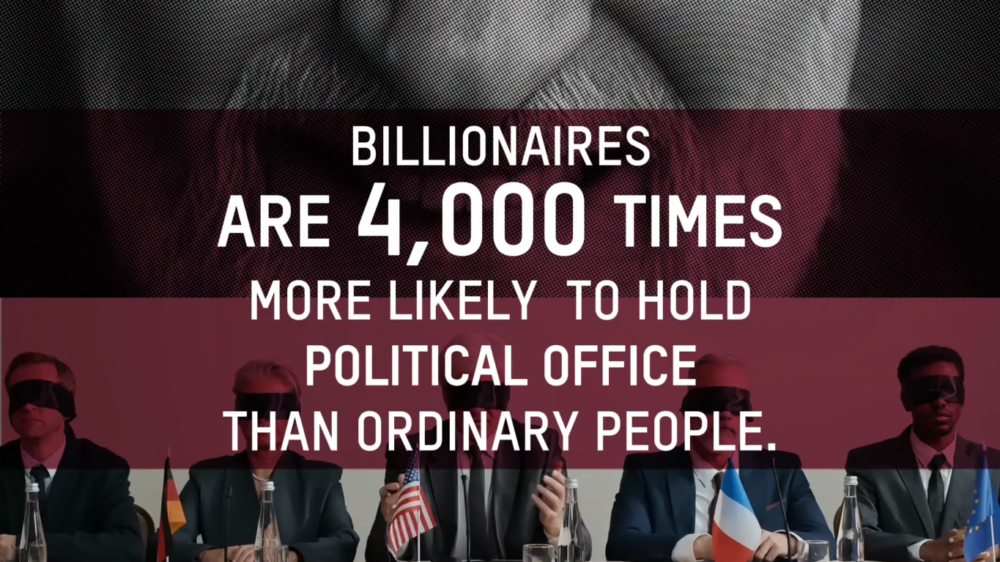
Billionaires are now 4,000 times more likely to hold political office than ordinary citizens, a concentration of power that is hollowing out democracies and fueling corruption and public anger, including in the Philippines, according to a new report released by Oxfam.
The report, “Resisting the Rule of the Rich: Protecting Freedom from Billionaire Power,” was published as global leaders and corporate elites convened at the World Economic Forum in Davos, Switzerland this week.
Oxfam warned that the growing political influence of the ultra-wealthy is weakening public institutions, undermining democratic accountability, and worsening inequality worldwide.
It said the Philippines remains the 15th most unequal country globally and among the most unequal in Southeast Asia.
Oxfam said the dangers of wealth concentration are increasingly evident in the Philippines, where inequality has become more pronounced and politically volatile.
Citing Forbes data, the group noted that the combined wealth of the country’s 50 richest individuals rose by six percent to US$86 billion (P5.098 trillion) in August 2025, up from US$80.8 billion (P4.79 trillion) a year earlier.
This growth in billionaire wealth contrasts sharply with the situation faced by millions of Filipinos struggling with stagnant wages, rising rice and fuel prices, overcrowded public hospitals, and repeated displacement caused by floods and typhoons, Oxfam said.
The organization warned that democratic backsliding is seven times more likely in highly unequal countries, where captured institutions fail to respond to public needs.
“The widening gap between the rich and the rest is at the same time creating a political deficit that is highly dangerous and unsustainable,” said Oxfam International Executive Director Amitabh Behar.
A World Values Survey covering 66 countries found that nearly half of respondents believe the rich often buy elections in their countries, reinforcing perceptions that political systems favor elite interests.
“Governments are making wrong choices to pander to the elite and defend wealth while repressing people’s rights and anger at how so many of their lives are becoming unaffordable and unbearable,” Behar added.
Public anger intensified last year following corruption scandals involving alleged misuse of billions of pesos allocated for flood control projects, the group noted.
The funds were meant to protect communities vulnerable to climate-driven disasters but were allegedly siphoned off by corrupt officials and contractors. The controversy sparked nationwide protests and drew international attention, it said.
“Filipinos are on the frontlines of climate disasters, yet decisions about our safety are increasingly shaped by wealth and political connections,” said Oxfam Pilipinas Executive Director Maria Rosario “Lot” Felizco.
“Inequality becomes deadly when greed determines who is kept safe and who is left to suffer the consequences of disasters,” she added.
Felizco said the growing concentration of wealth and political power is eroding trust in public institutions and weakening democratic governance in the country.
“Addressing inequality in the Philippines requires not only economic reform, but decisive action to prevent money from capturing our democracy,” she said.
To counter the political power of extreme wealth, Oxfam urged governments, including the Philippines, to adopt concrete reforms.
These include implementing realistic and time-bound national inequality reduction plans with clear benchmarks, imposing effective taxes on the super-rich, and strengthening regulations on lobbying and campaign financing.
The group also called for stronger safeguards to protect media independence, tougher rules against hate speech, and greater accountability mechanisms that empower ordinary citizens.
This includes stronger protections for freedoms of association, assembly, and expression, as well as support for civil society organizations and trade unions.
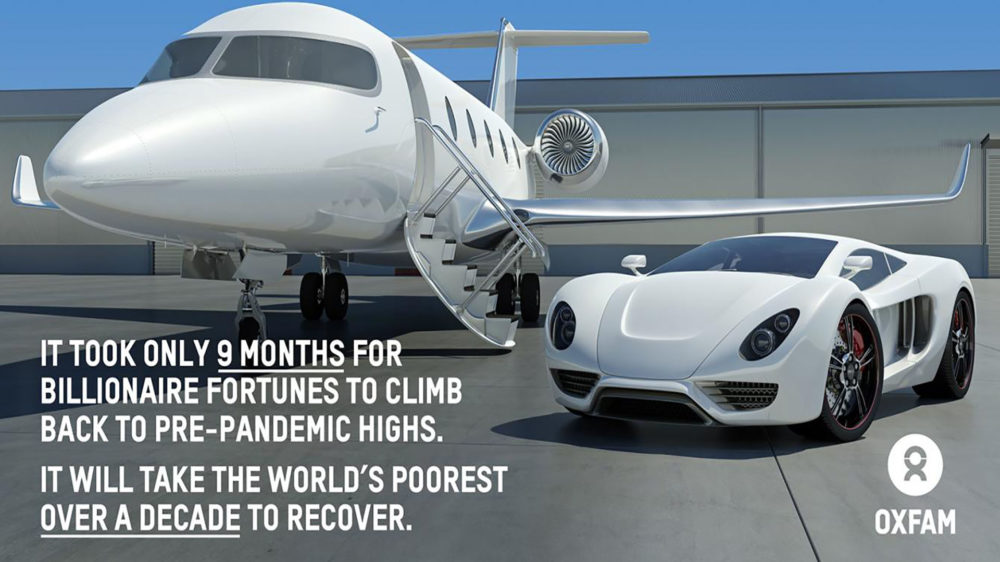
Oxfam said the rise in billionaire political influence coincides with an unprecedented surge in wealth. In 2025 alone, global billionaire wealth grew by more than 16 percent to a record US$18.3 trillion.
Since 2020, billionaire wealth has increased by 81 percent, even as living conditions for billions of people stagnated or deteriorated in the aftermath of the COVID-19 pandemic, it said.
Globally, Oxfam noted that one in four people regularly lack sufficient food, while nearly half of the world’s population lives in poverty.
The organization warned that extreme economic inequality combined with political exclusion is creating an unsustainable crisis for democracies.
Oxfam said without decisive action, the growing influence of billionaires in politics risks deepening inequality, weakening democracy, and fueling further public anger and instability in the Philippines and beyond.