As the energy crisis deepens existing inequalities and care workers remain unprotected, Oxfam Pilipinas calls for urgent actions to realize the Philippines’ gender and climate commitments.
Manila – Oxfam Pilipinas is urging immediate action amid the intensifying energy crisis, warning that Filipino women—especially those providing paid and unpaid care—are facing increasing burdens.
The Philippines’ heavy dependence on imported and fossil fuels leaves workers and households exposed when global prices shift, revealing that energy shocks are not gender neutral. The Philippine Commission on Women warns that energy‑related service disruptions increase women’s unpaid care load,1 as households compensate with more unpaid labor. This burden is overwhelmingly shouldered by women, especially as Filipino women spend nearly twice as many hours as men on unpaid care and domestic work,2 and hours can pile on as services become increasingly unaffordable.
The unpaid care burden excludes many women from formal work. According to the International Labor Organization, married women are 40% less likely to join the labor force than single women, with mothers of young children facing an even steeper “motherhood penalty.”3
Philippine Statistics Authority data show that women’s labor force participation is lower than men’s, ranging from about 19% to 24% between February 2025 and February 2026,4 even if the Philippines ranks 20th on the World Economic Forum Gender Gap Index.
About 6.6 million Filipino women work in the informal sector, often with no job security, fair wages, or benefits. Women with lower educational attainment are most likely to be stuck in these precarious jobs.5
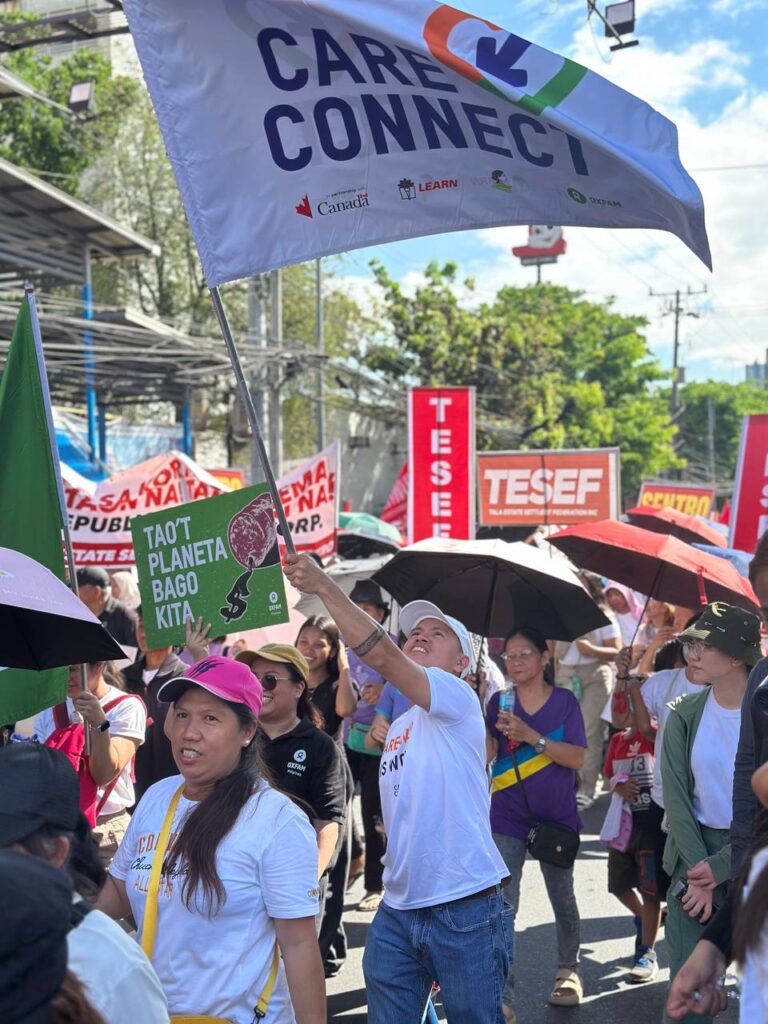
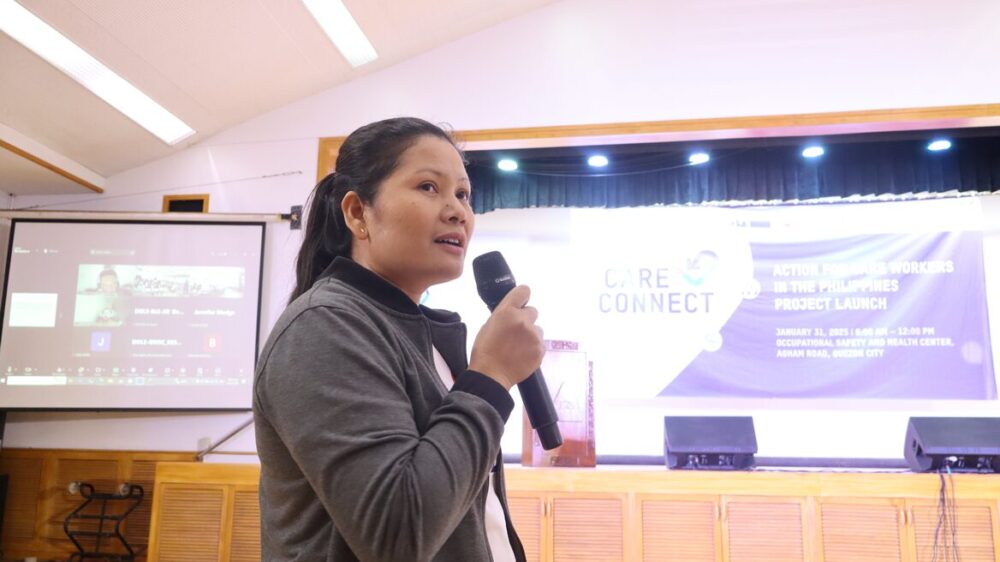
Even paid care workers remain vulnerable. A 2025 nationwide survey by Labor Education and Research Network (LEARN), United Domestic Workers of the Philippines (UNITED), and Oxfam Pilipinas found nearly half of Barangay Health Workers lack access to health and social protection, over 80% aren’t enrolled in savings or housing programs, and over 30% of domestic workers earn below PHP4,000 a month6 while working up to 12-hour shifts, revealing how care work is undervalued in the Philippines.
Oxfam’s 2026 global inequality report, Resisting the Rule of the Rich, revealed that billionaires are at least 4,000 times more likely to hold political offices than ordinary people.7 When the super-rich possess the economic and political power, policies that would most benefit women—such as living wages, care subsidies, and maternity and child protection—face the steep barriers at the benefit of increasing the bottom line.
With the Philippines ranking 15th out of 63 globally as the most unequal country and having the sharpest wealth divide in Southeast Asia,8 the energy crisis threatens to widen the inequality gap, with women among the marginalized and vulnerable sectors bearing the brunt.
Oxfam Pilipinas calls for the following:
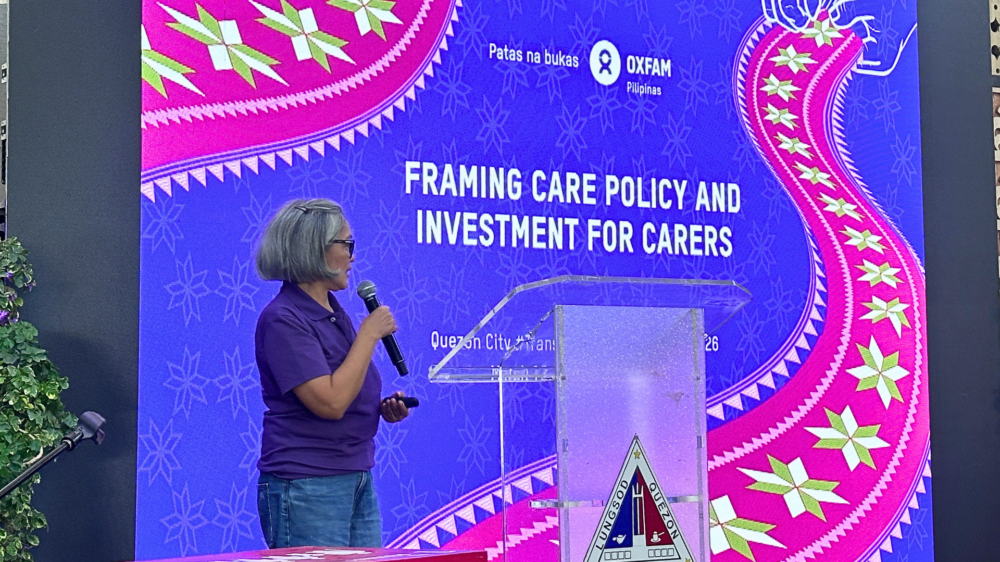
- Mandate the inclusion of the cost of care in national and local legislations and investments — publicly investing in childcare, eldercare, and community health infrastructure to recognize, reduce, and redistribute unpaid care work.
- Strengthen protections for care workers through the Batas Kasambahay amendment and the Magna Carta for Barangay Health Workers for fair wages, social protection, decent work conditions, and job security.
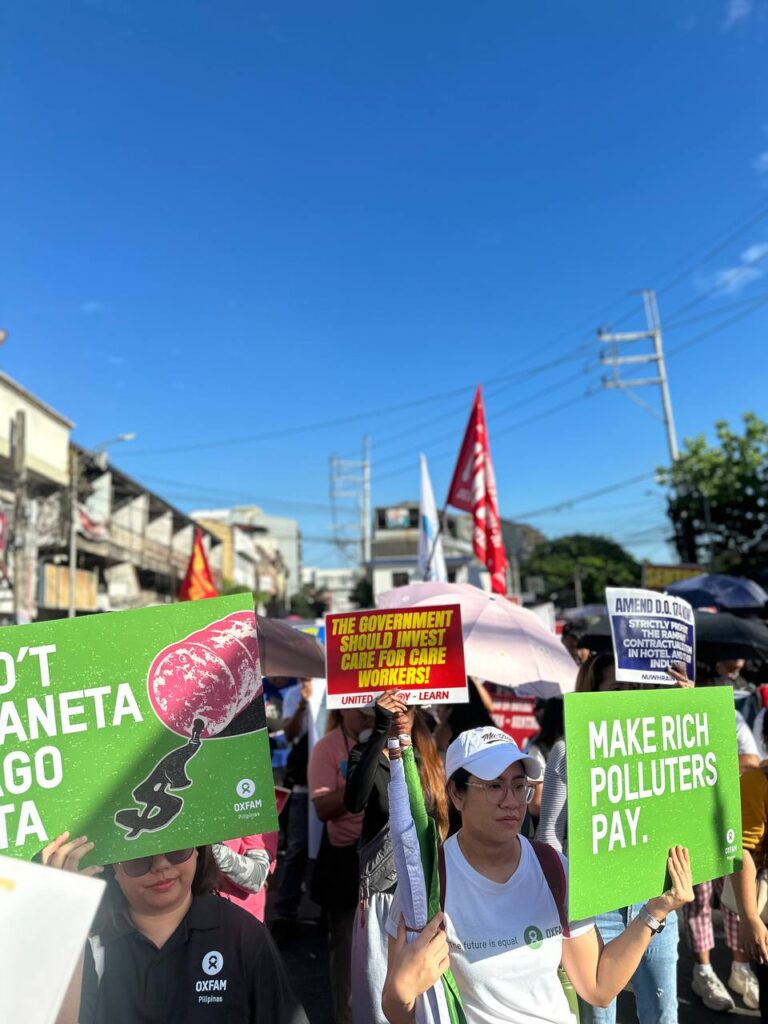
- Tax the wealth of the richest 1% and make the rich polluters pay to raise billions annually for public services and fighting inequality.
References:
- Philippine Commission on Women. (2026, April). Energy crisis threatens SDG gains: PCW urges action on women’s time and energy poverty. PCW. https://pcw.gov.ph/energy-crisis-threatens-sdg-gains-pcw-urges-action-on-womens-time-and-energy-poverty/
- Oxfam Pilipinas, UN Women, & Philippine Commission on Women. (2021). The 2021 National Household Care Survey. Oxfam Pilipinas. https://oxfam.org.ph/download/the-2021-national-household-care-survey/
- International Labour Organization, & UN Women. (2018). Care work and care jobs for the future of decent work. ILO & UN Women. https://www.ilo.org/global/publications/books/WCMS_633135/lang–en/index.htm
- Philippine Statistics Authority (2026). Labor Force Survey: Infographics. https://psa.gov.ph/statistics/labor-force-survey/infographics
- Global Network of Women Peacebuilders, cited in Rappler, “The Unique Challenges of Women Workers,” November 27, 2024. https://www.rappler.com/newsbreak/explainers/unique-challenges-filipino-women-workers/
- Labor Education and Research Network, UNITED, & Oxfam Pilipinas. (2025). Nationwide survey on care worker conditions. Oxfam Pilipinas (unpublished).
- Oxfam International. (2026, January 19). Resisting the rule of the rich: Defending freedom against billionaire power. Oxfam International. https://www.oxfam.org/en/policy_papers/resisting-rule-rich
- Oxfam Pilipinas and Action for Economic Reforms (2025, January 18), Inequality at a Breaking Point: A Call to Embed Equality in the Philippines’ Economic Agenda. https://oxfam.org.ph/download/inequality-at-a-breaking-point-a-call-to-embed-equality-in-the-philippines-economic-agenda/