unpaid care work
Localizing the Care Policy Scorecard for Policy Change
This learning brief examines how Oxfam Pilipinas and its partners address these policy gaps by transforming the care policy scorecard (CPSC). Originally a comprehensive policy assessment tool, it has been repurposed into a participatory social accountability process. This shift enables civil society groups and local governments to jointly diagnose legislative shortfalls, identify key intervention priorities and strengthen long-term accountability for care work.
Care Work in the Time of COVID-19: Addressing Gender Norms in the Philippine BPO Industry
Baseline Report As the number of COVID-19 cases increased dramatically at the height of the pandemic, so did the demand for invisible and unpaid labor when most people were forced to stay home during periods of lockdown and community quarantine. Consequently, women and girls bore most of the burden. Yet, while this was the […]
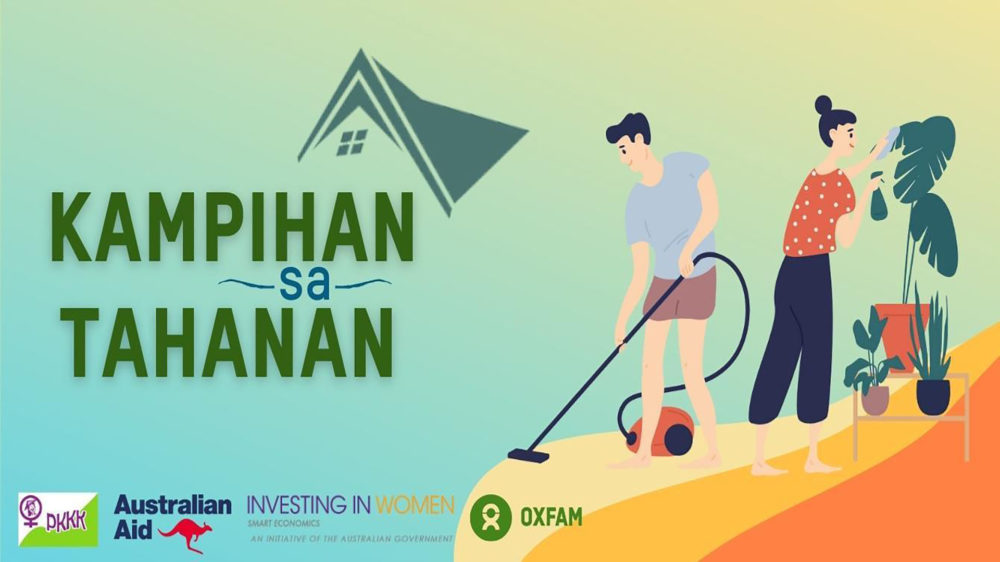
Kampihan sa Tahanan: Care Sessions on Unpaid Care and Domestic Work
What is unpaid care and domestic work (UCDW)? UCDW may refer to three things: 1) direct and indirect care of persons, 2) household chores, and 3) community volunteer work.3 The 2017 Oxfam National Household Care Survey found out that Filipino women were spending 12 hours daily on care work while men were only spending five […]

CARE WORK MATTERS: A Participatory Approach to Advocating for the Recognition and Redistribution of Unpaid Care and Domestic Work in Local Legislation
In the Philippines, a country extremely vulnerable to natural hazards and climate-related disasters, which exacerbate poverty and preexisting social vulnerabilities, women and girls do up to five to six times as much unpaid care and domestic work as men. There is growing recognition that the billions of hours of the most essential work, including heavy […]

Time to care
Unpaid and underpaid care work and the global inequality crisis Economic inequality is out of control. In 2019, the world’s billionaires, only 2,153 people, had more wealth than 4.6 billion people. This great divide is based on a flawed and sexist economic system that values the wealth of the privileged few, mostly men, more […]