Research in 12 barangays finds spending concentrated on relief, equipment and training, while long-term risk reduction and community priorities receive little support
QUEZON CITY, Philippines—Incomplete records, fragmented government oversight and limited technical capacity are preventing barangay disaster funds from being used strategically to protect communities, according to a new study published by development and aid agency Oxfam Pilipinas.
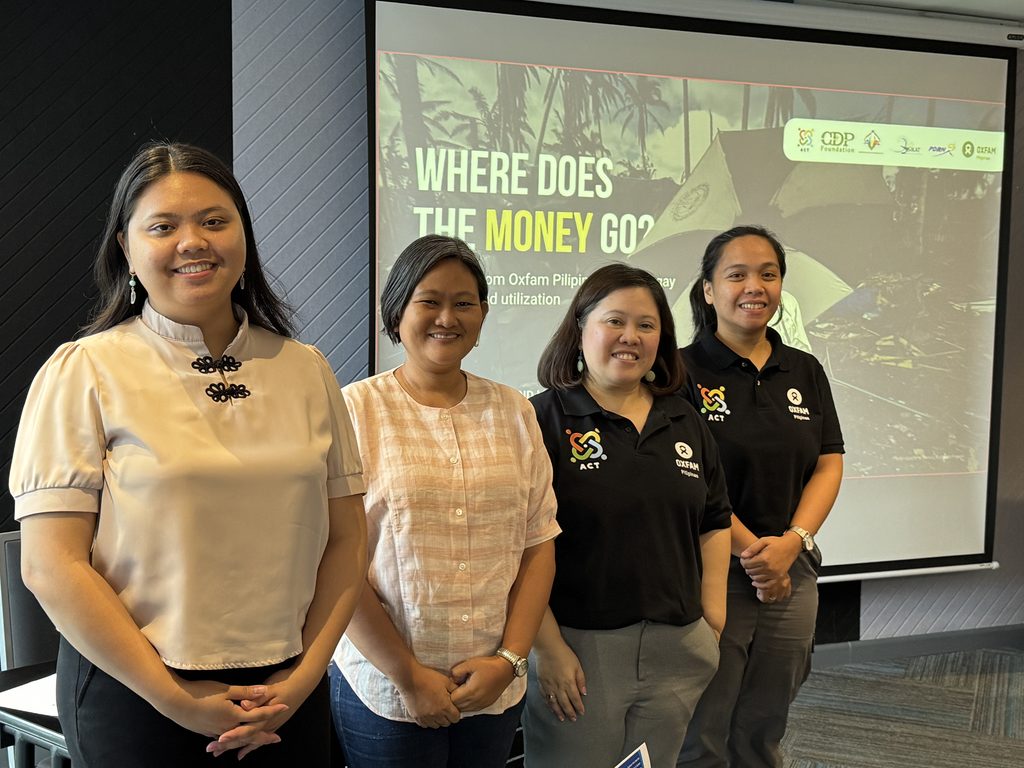
The study, Patterns and Changes in the Utilization of Barangay Disaster Funds: Evidence from Selected Communities in Eastern Samar and Catanduanes, examined the use of Local Disaster Risk Reduction and Management Funds (LDRRMF) in 12 barangays across six municipalities from 2020 to 2024.
It found wide differences in spending rates, but a common tendency to fund short-term, tangible items such as relief goods, equipment, and training. Investments in prevention, climate adaptation and livelihood recovery were rare. No rehabilitation and recovery expenditures appeared in the records reviewed.
“Barangays are the first line of protection when disasters strike, but they cannot reduce risk effectively when utilization records are incomplete, guidance on reporting is unclear and plans do not translate into spending,” said Oxfam Pilipinas Disaster Risk Reduction Manager Georgina Opinion. “The fund must be more than a source of relief goods after an emergency. It should help communities prepare, protect livelihoods, and reduce the risks that repeatedly push families into crisis.”
Philippine law requires local governments to set aside at least five percent of estimated revenue for disaster risk reduction and management. Seventy percent of the fund is intended for prevention, mitigation, preparedness, climate change adaptation and post-disaster recovery, while 30 percent is reserved for quick response.
However, records obtained for the study were often partial, aggregated, or missing. Some barangays presented Annual Investment Programs showing what they intended to fund rather than reports of actual expenditures. Others relied on handwritten records without standard categories. Barangay-level utilization data were also largely absent from the databases of oversight agencies.
The study also found that barangays are generally audited only once every three years limiting opportunities for timely feedback and correction. Commission on Audit (COA) regional representatives estimated that only around five percent of barangays in the region submitted reports regularly.
Community participation also did not consistently shape spending. Farmers, fisherfolk, women, older people, persons with disabilities, and young people identified needs such as livelihood assistance, dignity kits, assistive devices, and accessible evacuation support. However, no sector-specific disaster expenditures appeared in the records reviewed.
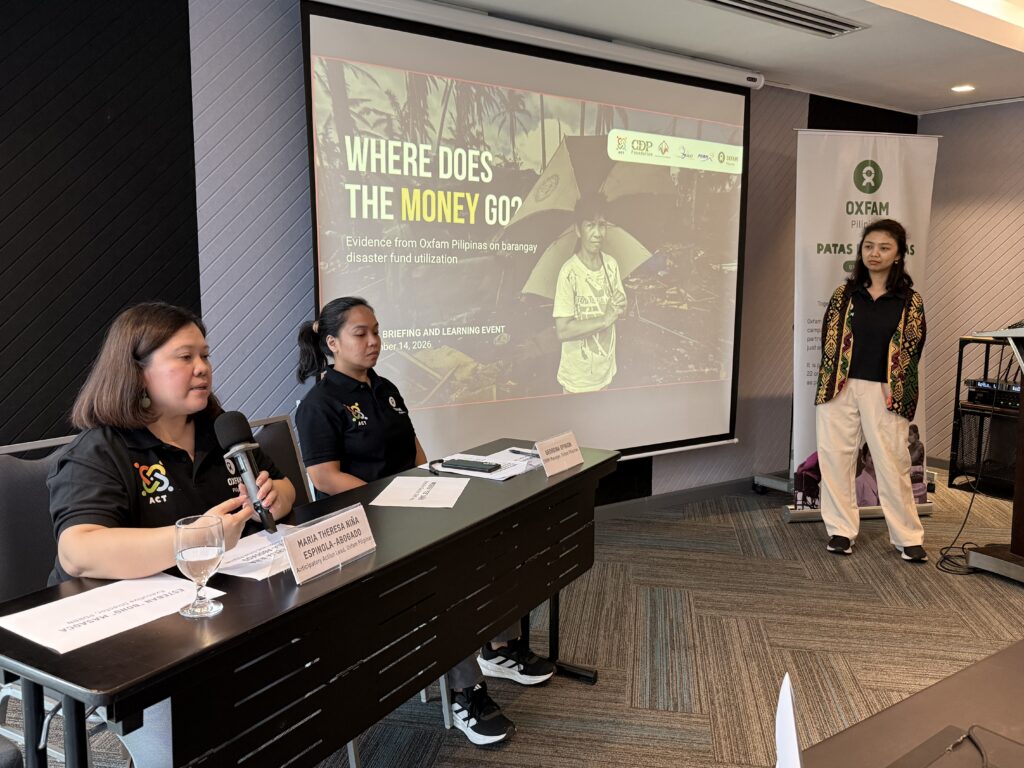
“Preparedness is not only about stocking supplies. It also means acting before hazards become disasters, using risk information and forecasts to protect people, livelihoods and essential services,” said Oxfam Pilipinas Anticipatory Action Lead Maria Theresa Niña Espinola-Abogado. “Barangays need practical, continuing support so they can turn local knowledge and early warnings into funded action before families suffer avoidable losses.”
Oxfam Pilipinas called on municipal governments to maintain complete and validated barangay records and provide regular technical support on planning, budgeting, and project design. The study also recommends stronger coordination among oversight agencies and participatory budgeting so communities can help decide how DRRM funds are used.
“Communities must be able to see where the money goes and have a real voice in deciding which risks are addressed,” Opinion said.//Ends
Notes to editors:
– The study covers 12 barangays in Virac, Dolores, Balangiga, Lawaan, Quinapondan and Salcedo in Eastern Samar and Catanduanes. Its findings describe these study sites and are not a statistical estimate for all Philippine barangays.
– The research combined a review of laws and policies, available barangay budget and expenditure records, focus group discussions, Community Score Cards, and action-planning sessions.
– The research was written by Gabriel C. Tan, Flordeliz A. Agra and Monica May L. Mendoza.
– SHARPER 2 is being implemented with the Center for Disaster Preparedness Foundation, People’s Disaster Risk Reduction Network and Sentro para sa Ikauunlad ng Katutubong Agham at Teknolohiya.